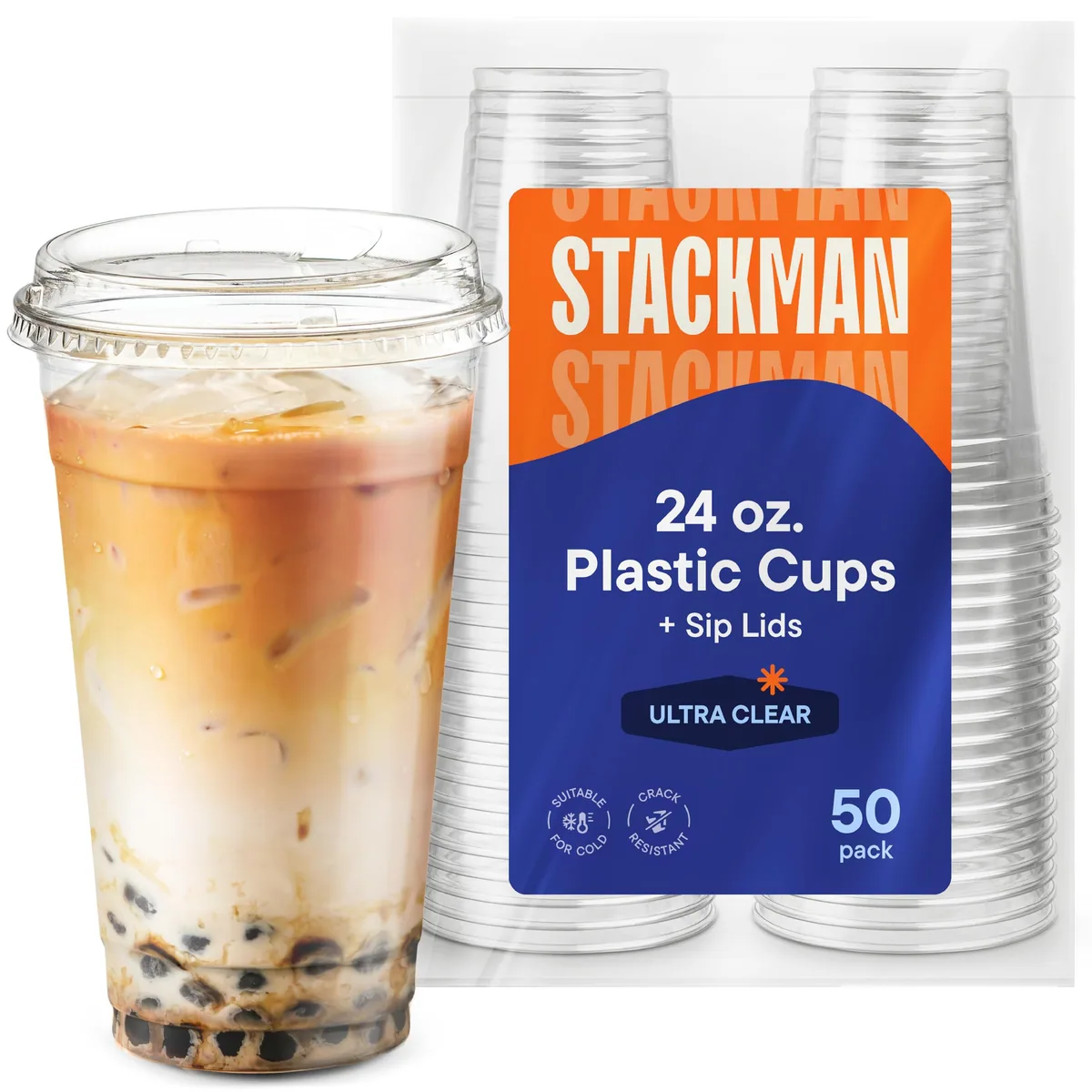
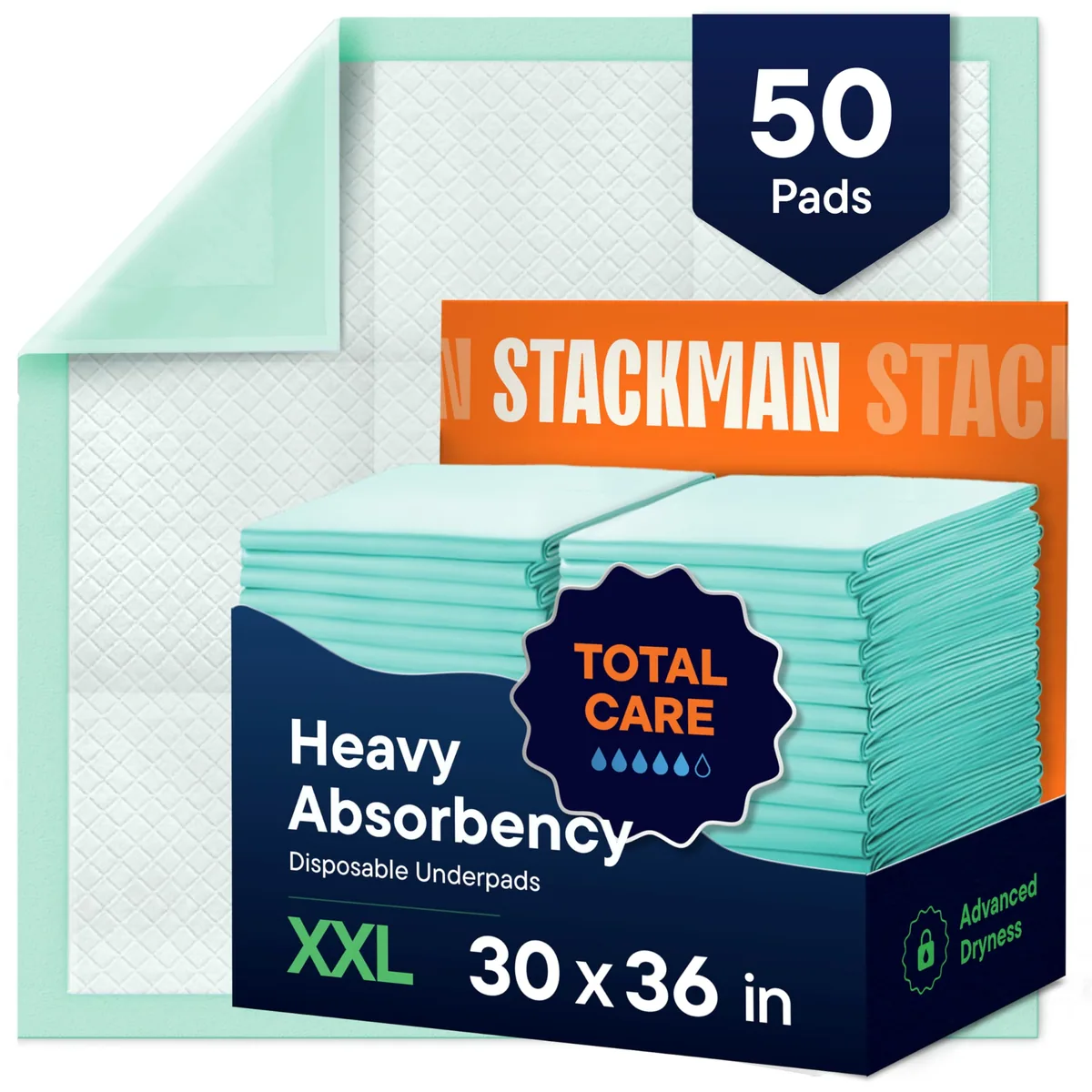
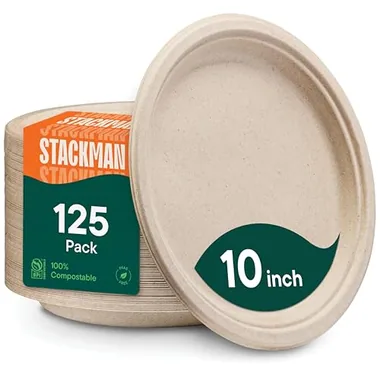
 125
125pack
Store it. Stock it. Stack it.
We make plates, cups, containers, and pads for the places that use them every day. Households pack lunches. Kitchens send out orders. Care homes stock up on protection, and dog owners keep a supply of training pads by the door. Our range runs from a sleeve of compostable bowls to cases of 2,500, in counts that match how you actually run through them.
Shop by department
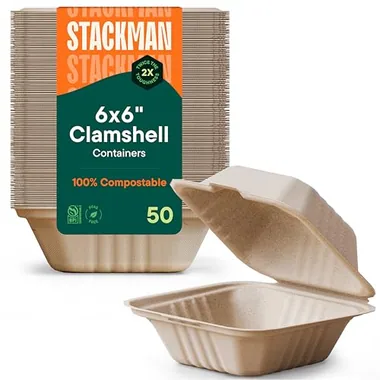
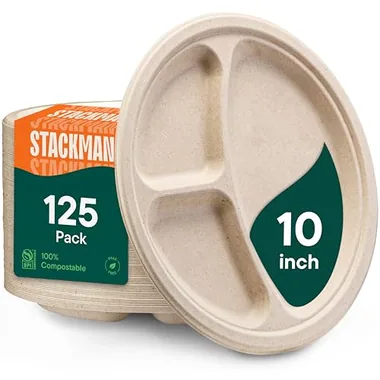
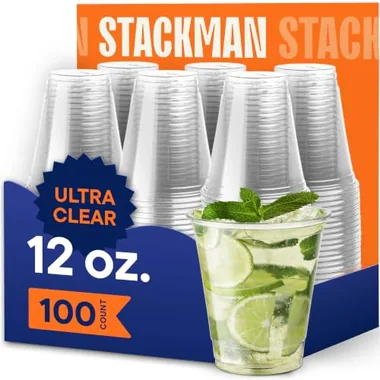
We keep 141 products on this shelf, split across 8 departments. Most of what we make falls into two groups. 57 lines are moulded from sugarcane bagasse into compostable plates, bowls, and trays that you can put in the microwave or freezer. The other large group is clear PET plastic for cups, lids, and containers that need to hold a seal.
If you are buying for your own kitchen, start with Compostable Plates or Cups and Lids. The packs there are sized for a household cupboard. For a café, food truck, or catering kitchen, look at Deli and Portion Containers and Take-Out Containers first. We pack those in case counts so you do not run out mid-service. Bed and Incontinence Protection and Pet Training Pads sit on their own shelf for anyone who needs them at home.
Tableware
125125
 500
500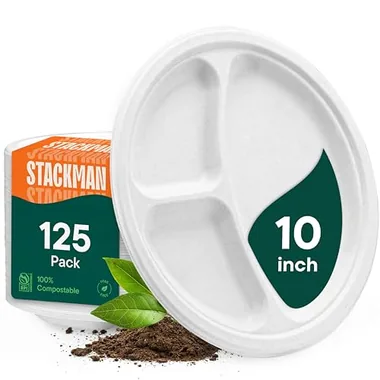 125
125
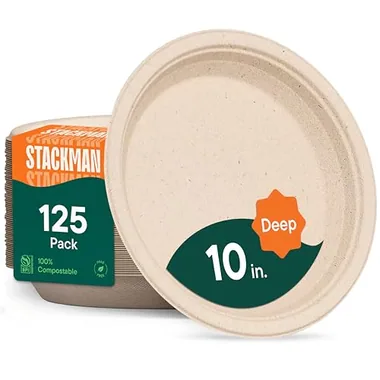 125
125
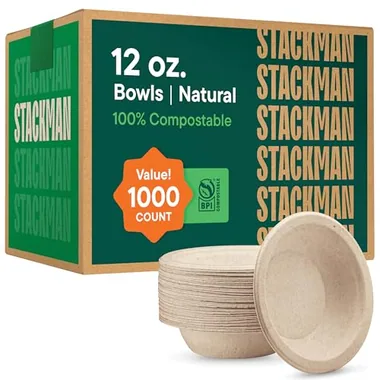 1,000
1,000
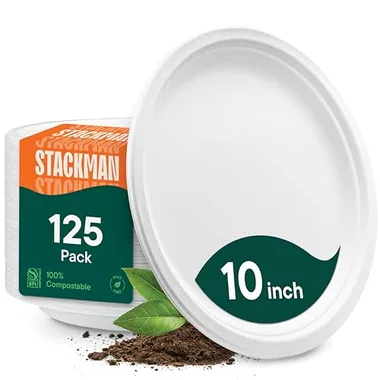 125
125
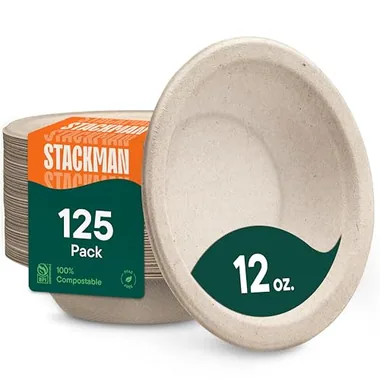 125
125
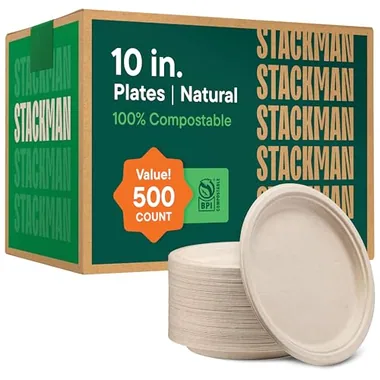 500
500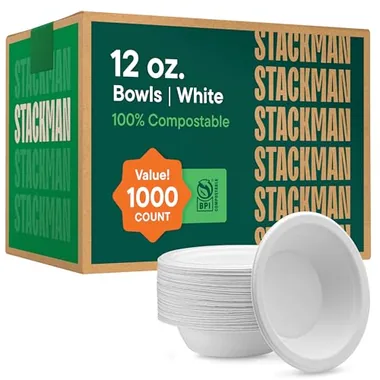 1,000
1,000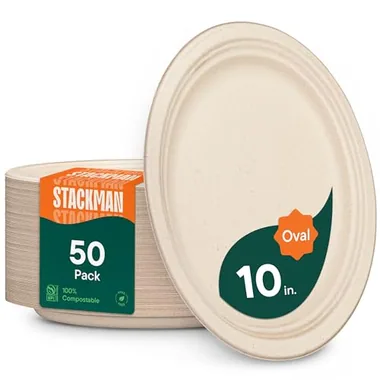 50
50
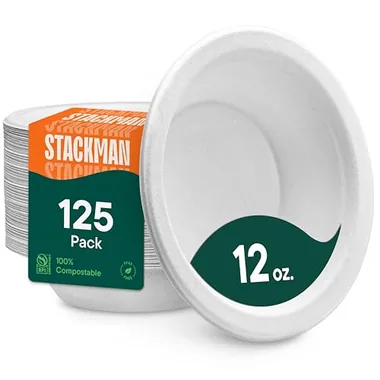 125
125Work it out
Tell it how many people and how long, and it counts the pieces. One box on its own cannot tell you that, because it only knows its own count.
Plates and cups are counted separately because people put down a plate once and pick up a cup three times.
Added value
One box tells you about one size. This is the whole ladder, so you can see where a size sits before you buy it.
| Across | What it suits | Products | From |
|---|---|---|---|
| 6 in | Side plates, cake, canapes | 2 | $13.99 |
| 7 in | Dessert, kids' portions, sides | 4 | $18.99 |
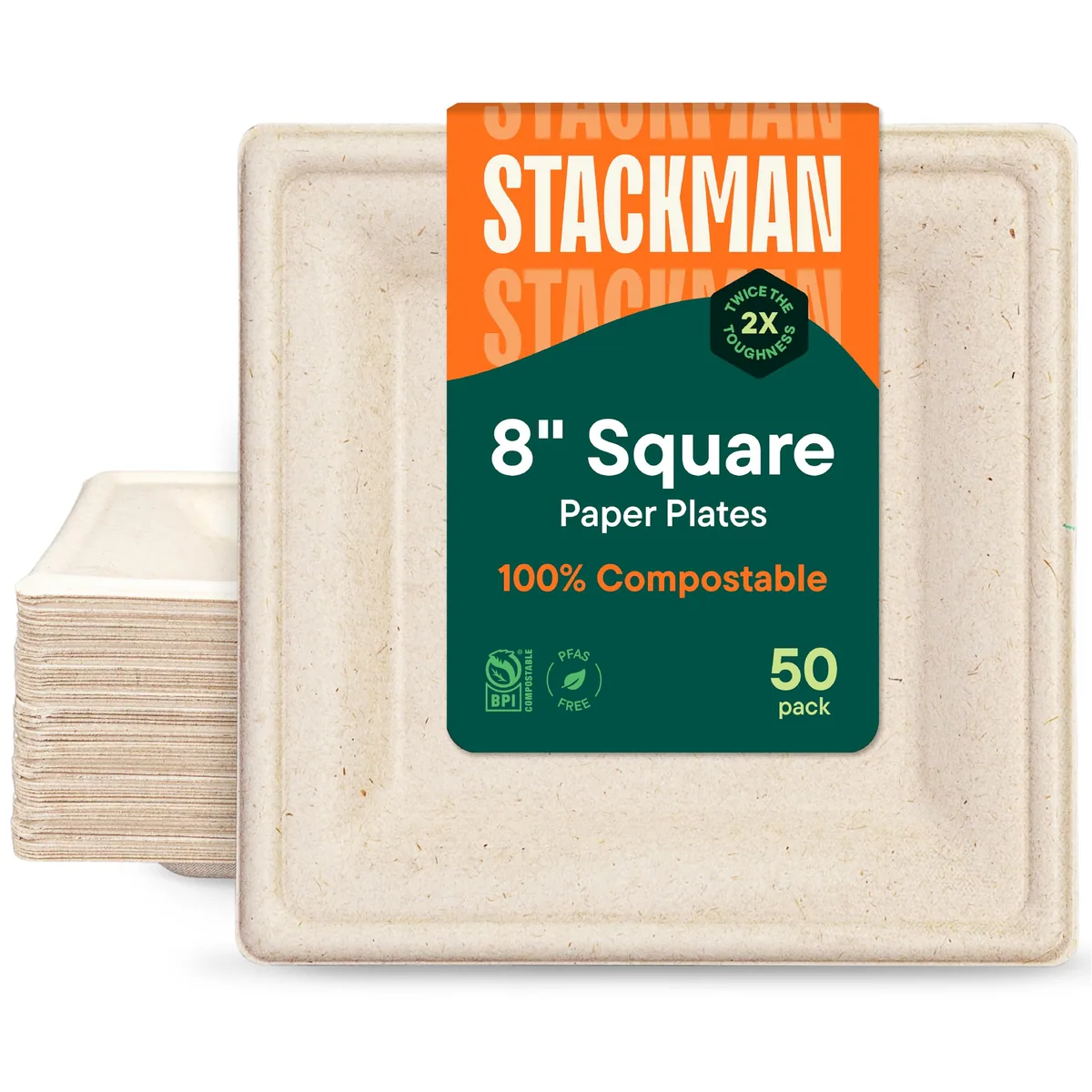
| 8 in | Lunch, sandwiches, a light main | 2 | $15.99 |
| 9 in | The everyday dinner plate | 10 | $22.98 |
| 10 in | A full dinner, a loaded buffet plate | 12 | $16.99 |
| 12 in | Platters and sharing boards | 1 | $29.99 |
| 12.5 in | Carving platters and large trays | 3 | $20.99 |
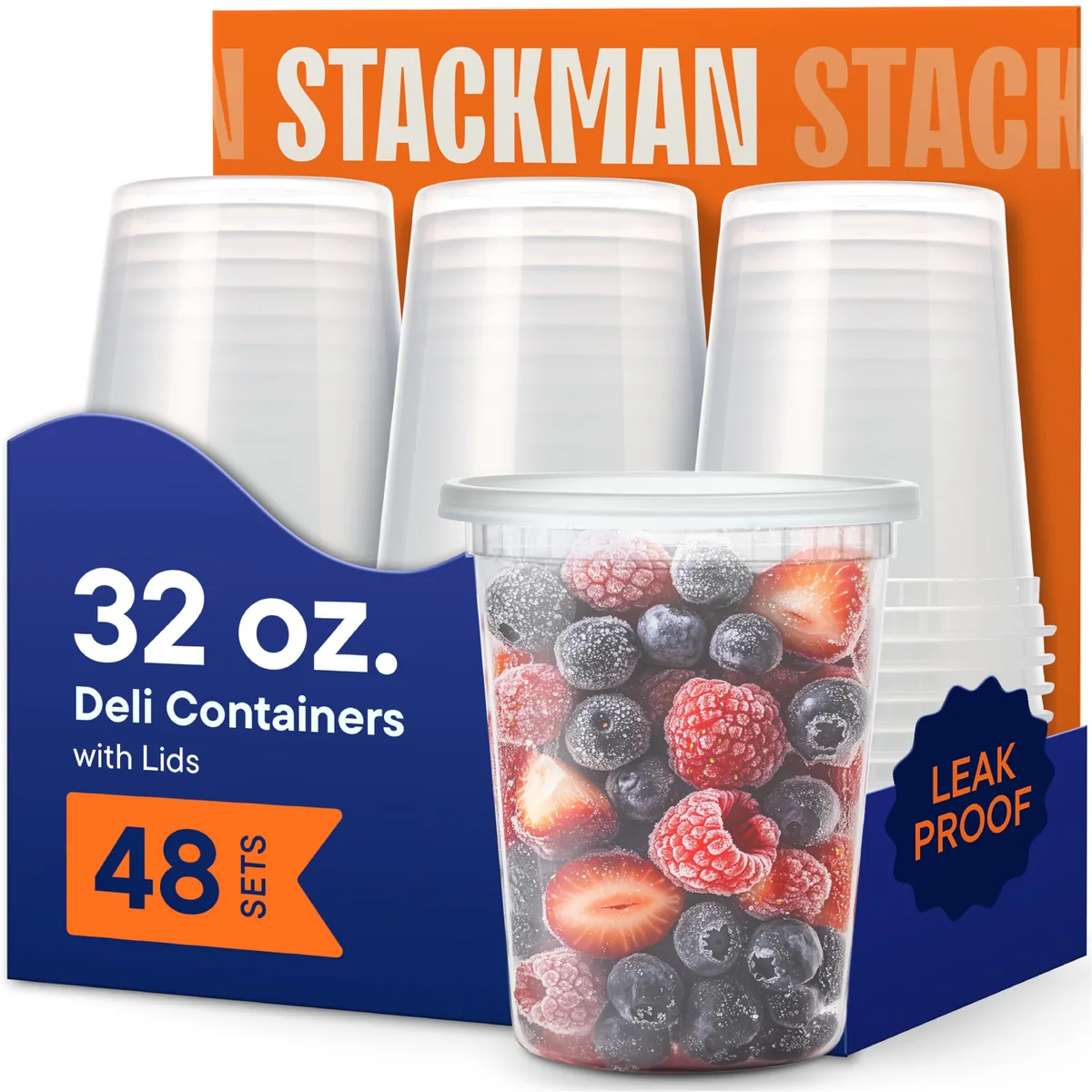
2 oz, 3 oz, 4 oz, 5.5 oz, 8 oz, 12 oz, 16 oz, 20 oz, 24 oz, 32 oz. The lids with a straw slot are made for 12, 16, 20 and 24 oz, and we say so on those products.
17" x 13", 17" x 24", 23" x 36", 30" x 36", 36" x 36", 22" x 22", 28" x 30", 28" x 34", 34" x 36". Which one you need depends on what you are protecting, not on who is using it.
Drinkware
100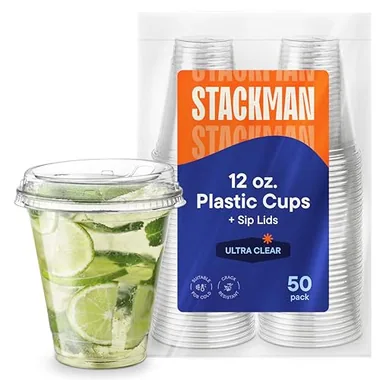 50
50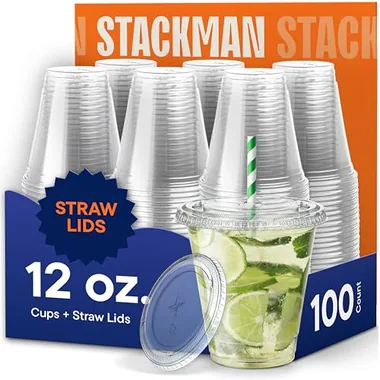 100
100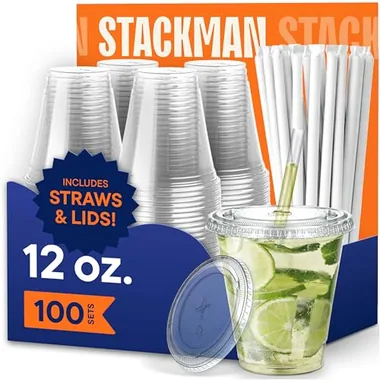 100
100
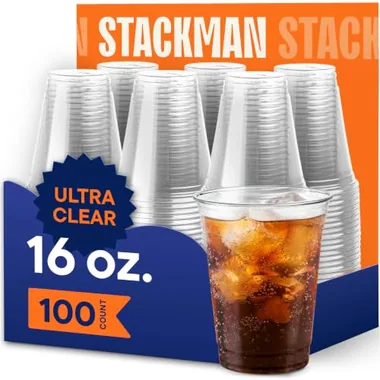 100
100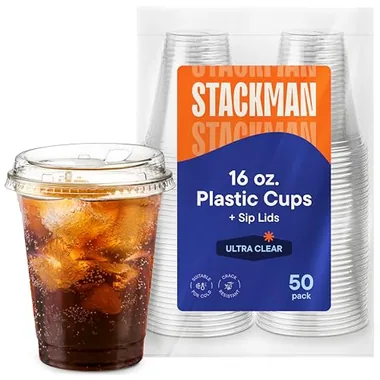 50
50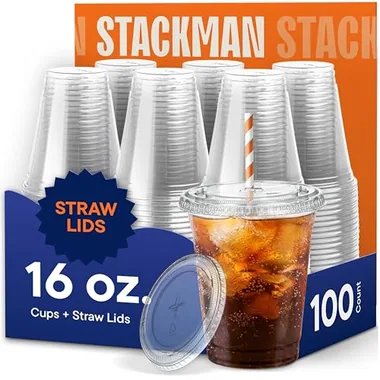 100
100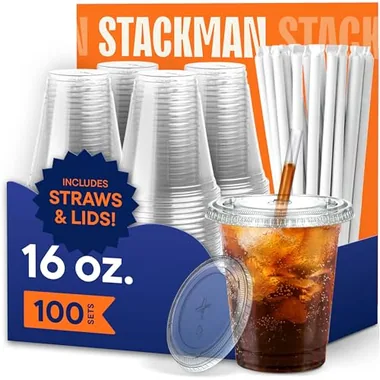 100
100
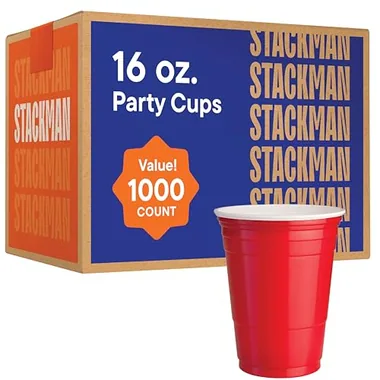 1,000
1,000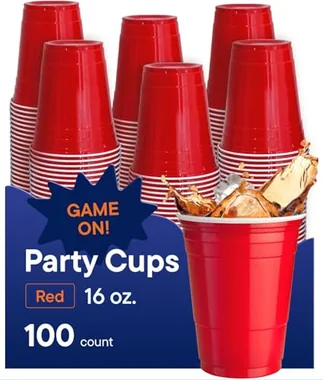 100
100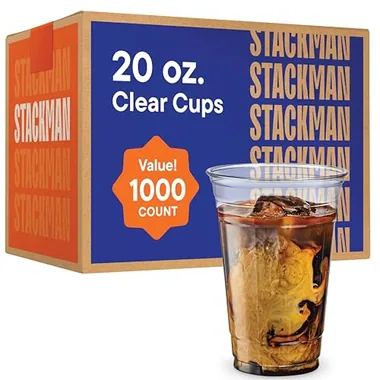 1,000
1,000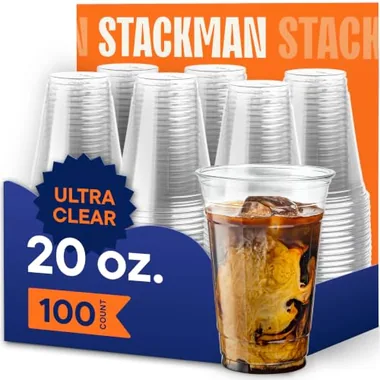 100
100Added value
A box is priced by the box and used by the piece. This is what the piece costs, worked out across everything we sell.
| Department | Best value pack | Pack | Price | Per piece |
|---|---|---|---|---|
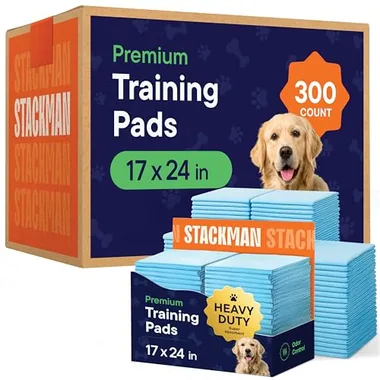
| Pet Training Pads | 17in x 24in Puppy Training Pads, 300-Pack | 300 | $54.99 | $0.19 |
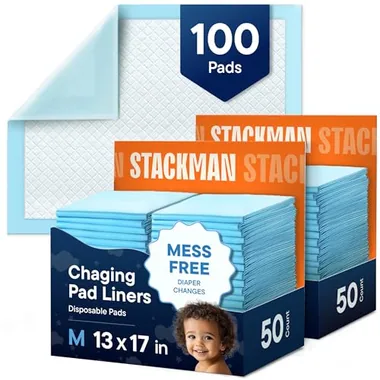
| Bed & Incontinence Protection | 17in x 13in Changing Pads, 100-Pack | 100 | $18.59 | $0.19 |
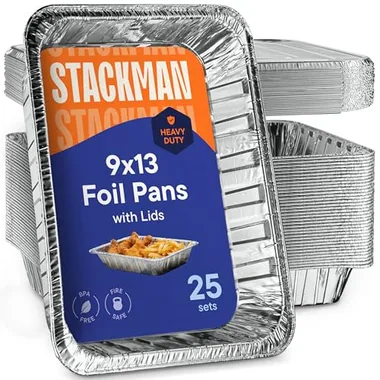
| Kitchenware | 9x13 Silver Foil Pan Lids, 100-Pack | 100 | $39.99 | $0.40 |
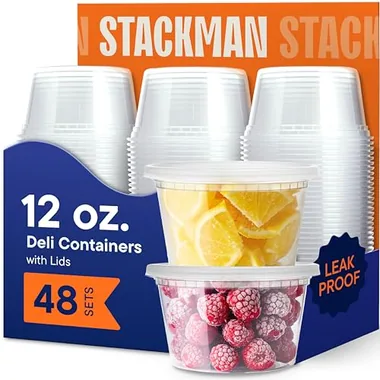
| Deli & Portion Containers | 2 oz Portion Cups, 200-Pack | 200 | $16.99 | $0.09 |
| Take-Out Containers | 8x8 White Hinged Clamshells, 100-Pack | 100 | $29.99 | $0.30 |
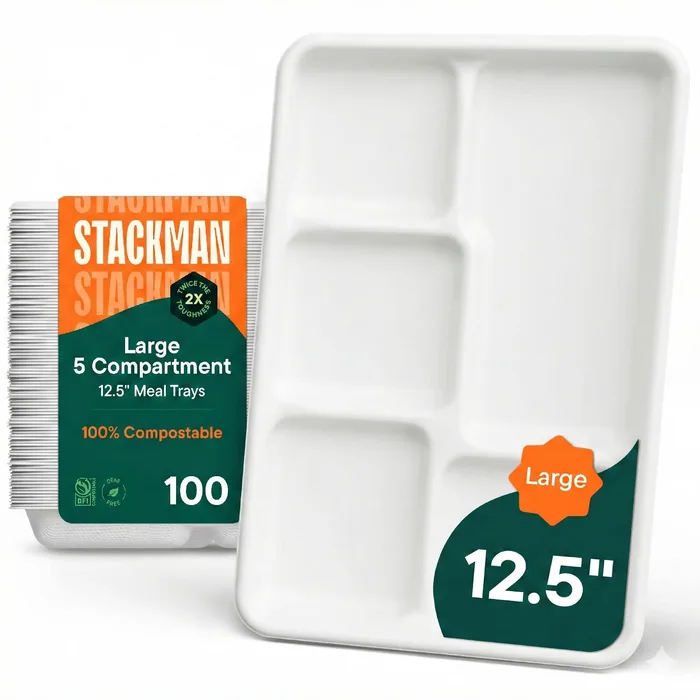
| Bowls & Lunch Trays | 12 oz White Soup Bowls, 1,000-Pack | 1,000 | $79.99 | $0.08 |
| Compostable Plates | 7-Inch Natural Brown Dessert Plates, 1,000-Pack | 1,000 | $69.99 | $0.07 |
| Cups & Lids | 3 oz Cold Cups, 2,500-Pack | 2,500 | $59.99 | $0.03 |
We size our packs around how fast you actually run out of something. A household goes through cups differently than a café does, so we count them that way. You will find a box for the week and a case for the month. The largest pack we offer holds 2,500 pieces. Across all 141 products there are more than 33,000 individual pieces.
The number on the box tells you what you pay right now. The figure that tells you what you are really spending is the price per piece. It is simple to work out. Take the total and divide it by the count inside. Our pieces start at under three cents each, and the middle of our range sits around twenty-six cents. That gap between a $12 pack and a $30 one often comes down to how many are in there, not what they cost to make.
When you know the per-piece rate, you can compare a sleeve of bowls against a case of containers without guessing. You see what you get for the money before it reaches your cart.
Honest comparison
Not every plate fits the same job. We make our compostable bagasse tableware to handle the middle ground, and it helps to see where it sits next to the other options you already know.
Ordinary coated paper plates are cheap and they fold under anything wet or heavy. Hard plastic plates hold up better, but they do not break down and most of them cannot go in a microwave. Washable crockery lasts for years if you have room to store it and time to wash it.
Our bagasse plates and bowls are cut from sugarcane fibre. They hold hot food without buckling, they go into the freezer and microwave, and they compost at the end of the meal. They cost more than paper but less than running a dishwasher, and they do not sit in a landfill after you use them. Pick what fits your day.
| Our bagasse fibre | Coated paper plate | Hard plastic | Washable china | |
|---|---|---|---|---|
| Hot, wet food | Holds without a separate coating to peel | Coating can soften and lift | Holds, but can warp when reheated | Holds indefinitely |
| Oily food | Stays on the surface, absorbs slowly | Grease wicks under the coating edge | No absorption | No absorption |
| After the meal | Compostable where a facility accepts it | Usually neither recyclable nor compostable | Recyclable in theory, rarely in practice | Washed and used again |
| Washing up | None | None | None if thrown away | All of it |
| Cost per use | From 2.4¢ | Usually a little less | Similar | Lowest over years, highest on day one |
| Where it is wrong | A long, very wet meal, or no composting nearby | Anything hot and heavy | Anywhere you wanted to compost | A hundred guests and no dishwasher |
Take-out and storage
5048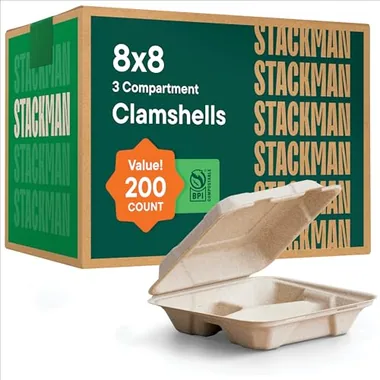 200
200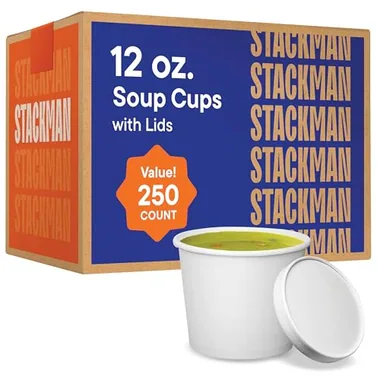 250
250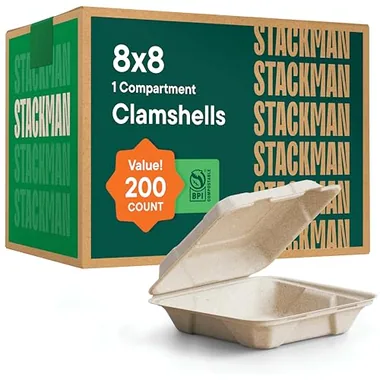 200
200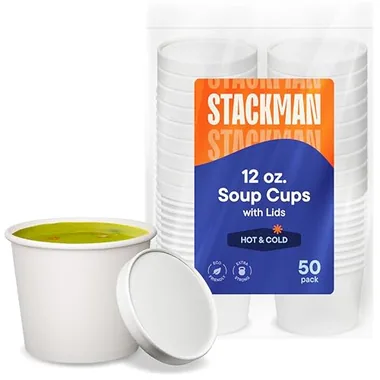 50
50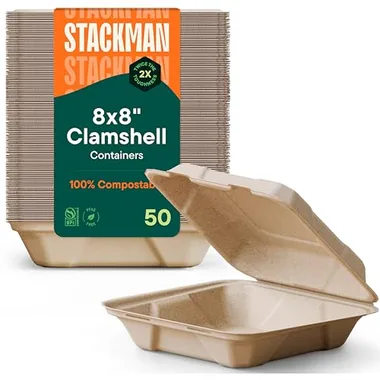 50
50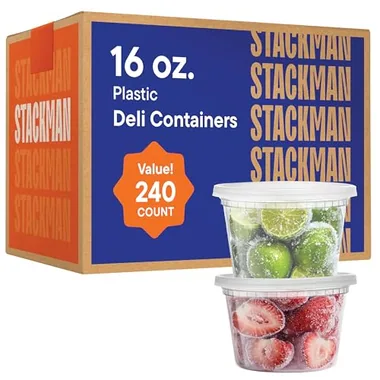 240
240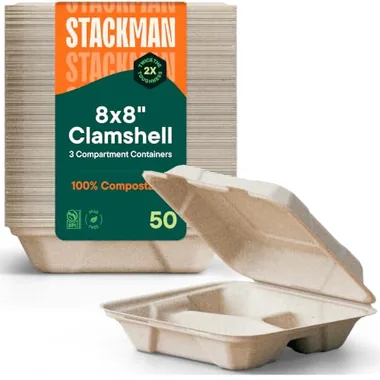 50
50
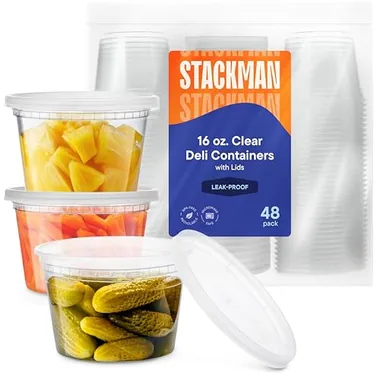 48
48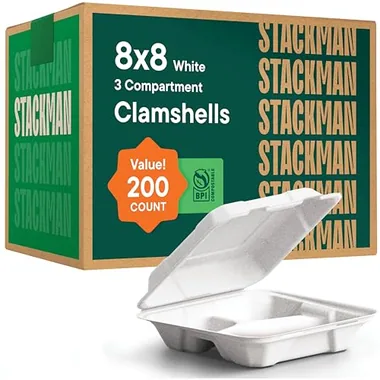 200
200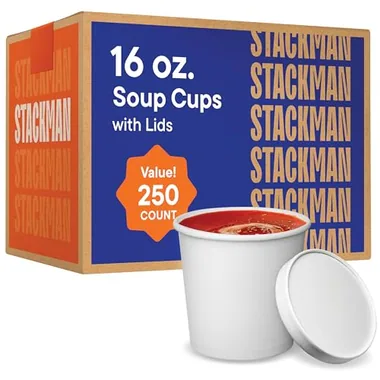 250
250Product quality
We test disposables the way you use them. A plate in our range has to hold a full portion of something heavy and wet without sagging or soaking through. We load it up and leave it sitting, because that is what happens at a buffet line or a backyard cookout. If the rim goes soft or the base bows, we do not carry it.
Lids get a different treatment. We open and close them until the seal starts to give out. A lid that leaks after a dozen uses is not much good for a kitchen that goes through containers by the sleeve, so we count the cycles. When it stops holding tight, we stop counting.
Cups take a drop test from counter height. We want to know whether they crack or split when they hit a tile floor. Most of us have knocked a drink over while we are reaching for something else. The cup should survive that moment without spilling everywhere.
These tests are not glamorous. They are the things we check before we put our name on anything, and every item in the catalogue is made for everyday use, not for conditions it was never built for.
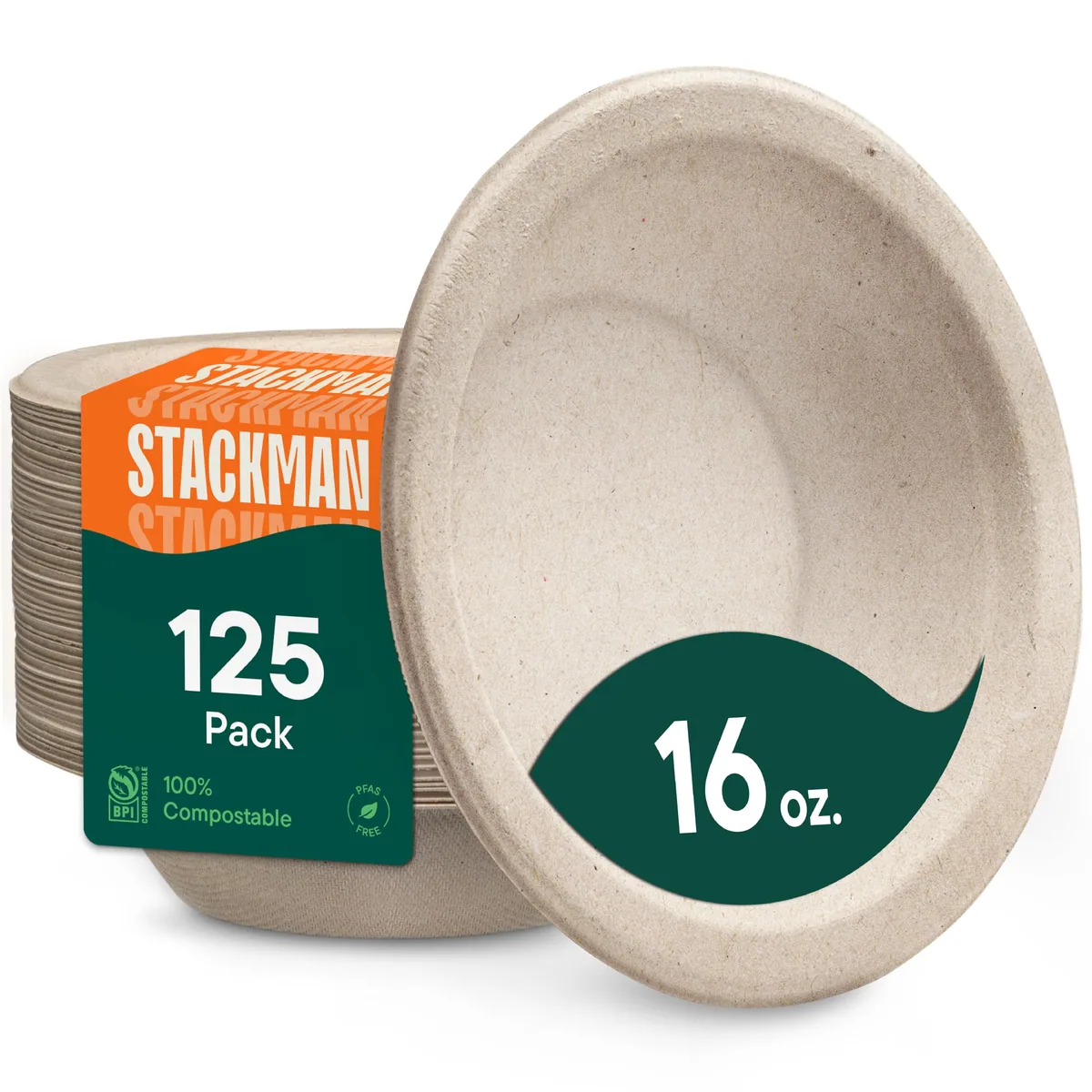
Certification
What we say about our products is what we can back up. Across the catalogue, 57 of our lines are made from sugarcane bagasse and we state that every one of them is compostable. Certificate numbers and registration dates belong to the bodies that issue them.
What we do have is BPI certification on 27 of those bagasse products. The Biodegradable Products Institute runs an independent lab test that checks whether a material breaks down in a commercial composting facility within a set timeframe and leaves nothing harmful behind. When we mark something as BPI Certified, it means that product passed.
We also call out PFAS-free status on 26 items in the range. PFAS are a group of chemicals used to make paper and molded fiber resist grease and water, and they do not break down in soil or water. We do not use them on those 26 lines.
You will see BPA-free stated on 29 of our plastic products as well, which tells you the PET contains no bisphenol A. These are the material claims we make in our own copy, counted from the full list of what we sell. If a claim is not printed here or on a product page, we are not making it.
BPI uses ASTM D6400 as the base standard for assessment for all items going through the BPI Certification process.
Biodegradable Products Institute, Compostability Certification, read 22 August 2026
Added value
We make 57 of our lines from sugarcane bagasse, and every one of them carries the 100% compostable claim. That word means something specific. It does not mean the plate dissolves on its own in a backyard bin or disappears if you toss it in the regular rubbish. What it means is that a commercial composting facility can break it down into soil, provided the facility actually accepts it.
Here is the part that matters for you. Most kerbside collection programmes do not take compostable packaging. They send it to landfill, and in a landfill it sits there with everything else. No air reaches it, so it cannot break down the way it would in a compost pile. You have done nothing wrong by buying it. The product works as we say it will at the table. But it only delivers on the environmental promise if it ends up in the right place.
So check before you bin it. Look up your council's waste rules online, or call them and ask whether they accept certified compostable foodware. If they do not, search "commercial composting near me" and see whether a drop-off point exists in your area. A few minutes of checking is what turns a bagasse plate into what it is meant to be.
The feedstocks accepted vary by composting facility and should always be free of contaminants such as herbicides, non-compostable packaging, and produce stickers.
U.S. Environmental Protection Agency, Composting, read 22 August 2026
| Material | Our lines | Where it goes |
|---|---|---|
| Sugarcane bagasse | 57 | Commercial composting where it is accepted, otherwise general waste |
| PET plastic | 49 | Kerbside plastics where PET is collected, rinsed first |
| Aluminium | 5 | Kerbside metals, scraped clean or it is rejected |
| Absorbent pads | 9 | General waste. These are not recyclable and we will not pretend otherwise |
Kitchen and care
25100
300
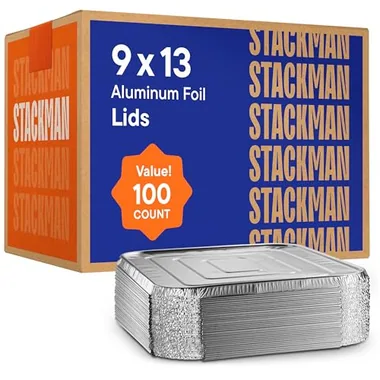 100
100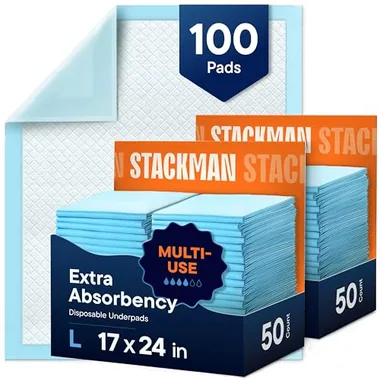 100
100
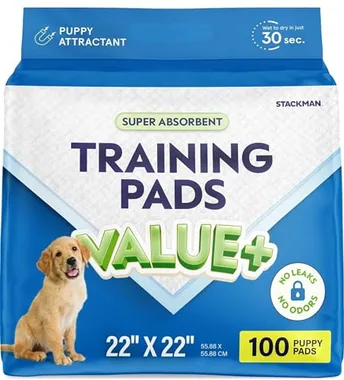 100
100
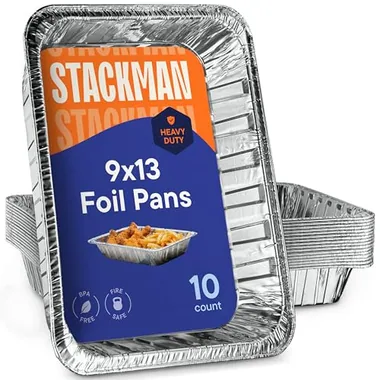 10
10 200
200
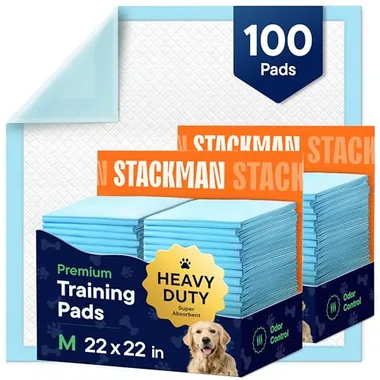 100
100
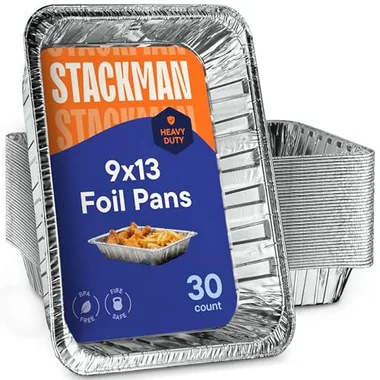 30
30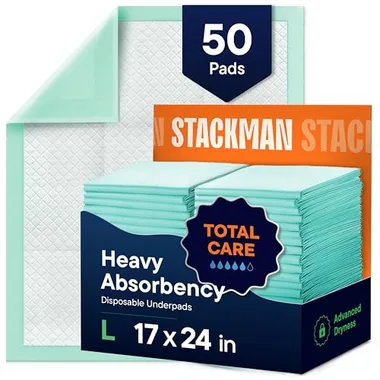 50
50
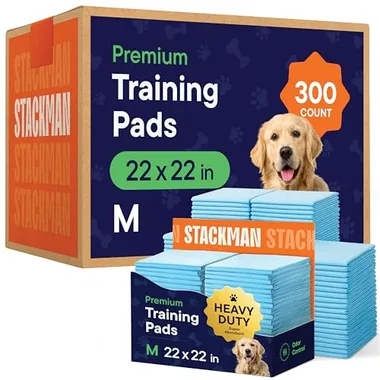 300
300
Production and history
We started with one problem. A case of containers arrived crushed, and the lids did not seal. Everything since has come from the same habit: we buy the thing, use it in a real kitchen for a week, and only then decide whether it is good enough to carry our name.
Two materials do most of the work for us. Sugarcane bagasse is the fibre left over after cane is pressed for sugar. It is what you might call agricultural residue if you were writing about it in a report. We think of it as raw material.
We take that wet pulp, mould it into the shape we need, and dry it into something rigid enough to hold a loaded plate of food. The result is a bowl or tray that feels different from paper or foam. It has some weight to it, and it does not go soggy when you put something wet on it.
PET is the other material we rely on most. We draw it clear so a cold drink still looks like a cold drink when you hold the cup up to the light. You can see what is inside the container without opening it. That matters more than you would expect when you are working through a busy shift and need to grab the right thing at a glance.
We test the way people actually use these things. Not on a lab bench with instruments, but in the ways that break them: a plate loaded with something heavy and wet, a cup dropped from counter height, a lid opened and closed repeatedly until it finally stops sealing properly. If it does not hold up under that kind of treatment, we do not pack it.
We count our products in the sizes that people actually run out of. A box for a household kitchen, and a case for a place that goes through them by the sleeve. That is how we arrived at 141 products across 8 departments, and it is why we keep making them this way.
We did not set out to build a catalogue. We started because a case of containers arrived crushed, and the lids would not seal. That was the whole problem at the beginning: we bought something, it failed in a real kitchen, and nobody seemed to have fixed it.
So we found one that worked. Then another. Every line we have added since came from the same habit: run into something you need, use it for a week, decide whether it is good enough to carry our name. We kept running into gaps. A plate that bends when you load it with something wet. A cup that cracks if you drop it from counter height. A lid you open and close until the seal gives out.
That is how one product became 8 departments. We make plates and bowls from sugarcane bagasse, which is what is left after the cane is pressed for sugar. We mould it wet and dry it into shapes that hold up. For cold drinks we draw PET clear so you can see what you are holding. We pack in the counts people actually run through, whether that is a household box or a sleeve for a kitchen that goes through them fast.
141 products now, across compostable tableware, drinkware, deli containers, take-out packs, bowls, pads for pets and people, and a few pieces of kitchenware. They all started the same way: we needed it, we could not find one we trusted, so we made it ourselves.
The people
The people behind this range share one habit. They buy the thing, use it in a real kitchen for a week, and only then decide whether it is good enough to carry our name. We test the way you actually use our goods. A plate loaded with something heavy and wet. A cup dropped from counter height. A lid opened and closed until it stops sealing.
We work in two materials most of the time. Sugarcane bagasse, which is what remains after the cane is pressed for sugar, moulded wet and dried into plates and bowls. And PET, drawn clear so a cold drink looks like a cold drink. The counts we pack are the ones people actually run through. A household box and a case for a kitchen that goes through them by the sleeve.
Buying and testing
They load a plate until it gives, drop a cup on a hard floor, and open a lid until it stops sealing. A line that fails here does not get made.
Packing
They work out whether a line wants a household box, a case, or both, and they are the reason a 2,500 pack exists next to a fifty.
Answering
Every question about a size, a lid or a compost bin lands with them, and the answers they keep giving are what our guides were written from.
Watch
This short video walks through our range of plates, cups, containers, and pads. It shows how each one looks in your hand, how the lids fit, and what a loaded plate actually does when you lift it. A photograph tells you the shape and size, which matters. But if you want to know whether a bowl will hold up to soup or a cup will survive a drop onto a counter, watching it is the honest way to find out.
Filmed by us for our own training pads. The absorbency demonstration in it is our own. We have not tested another maker's pad and we do not name one.
Gallery
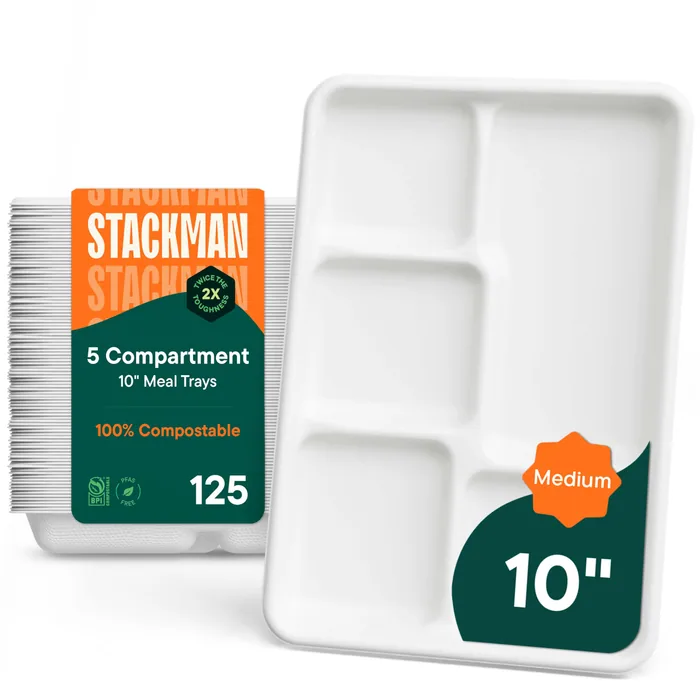
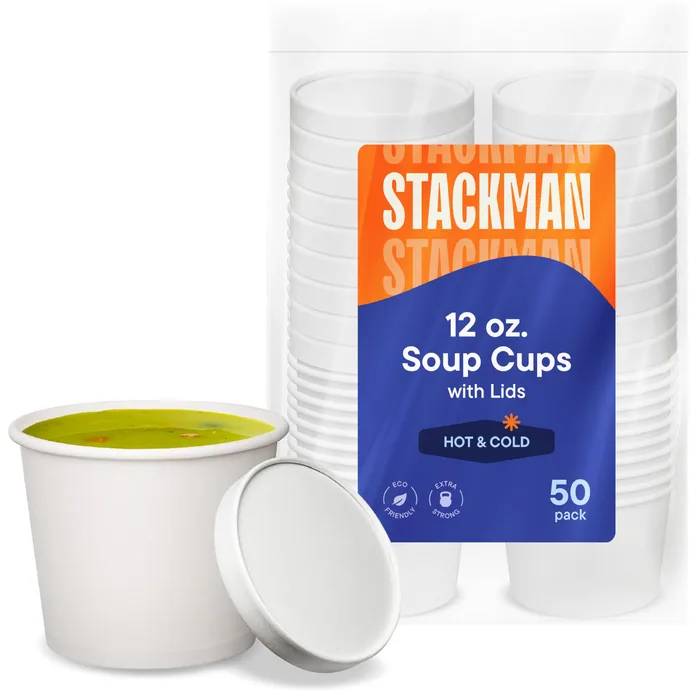
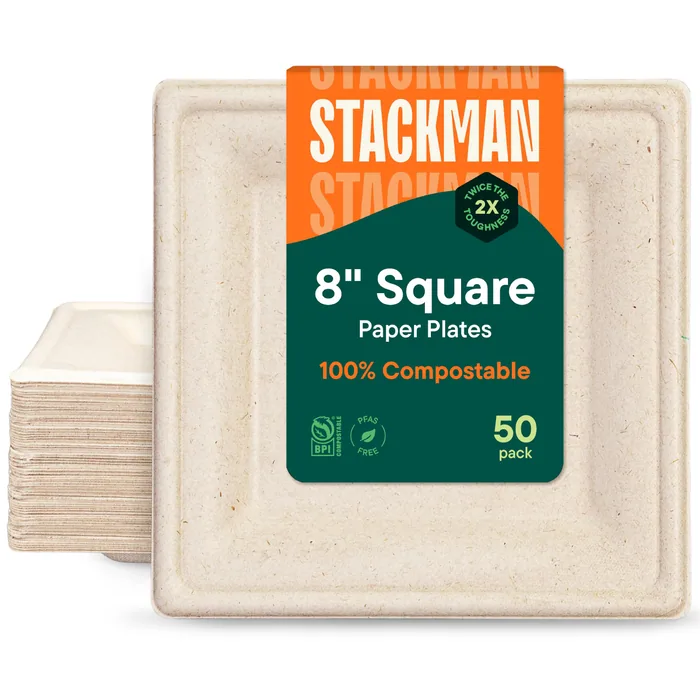
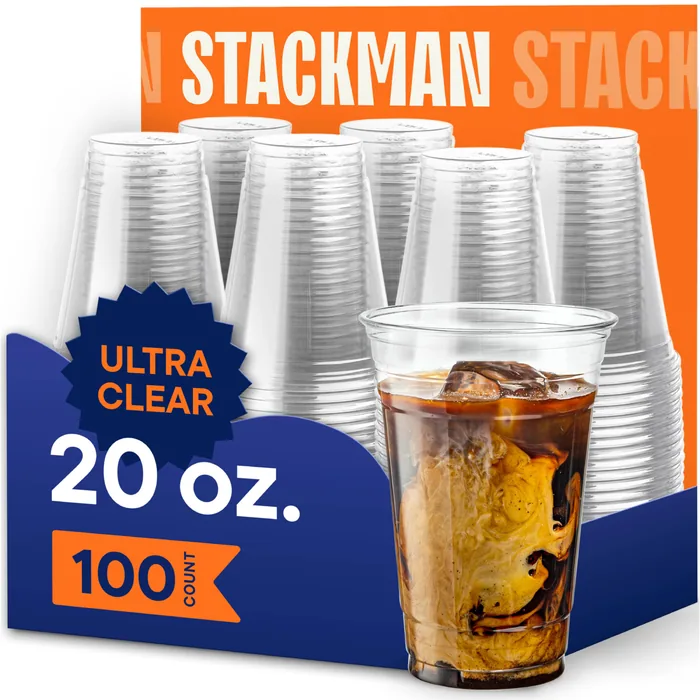
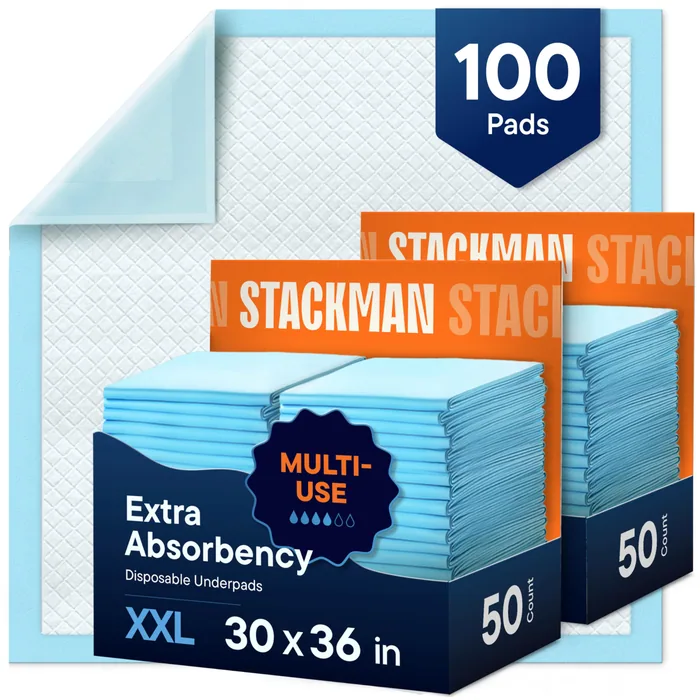
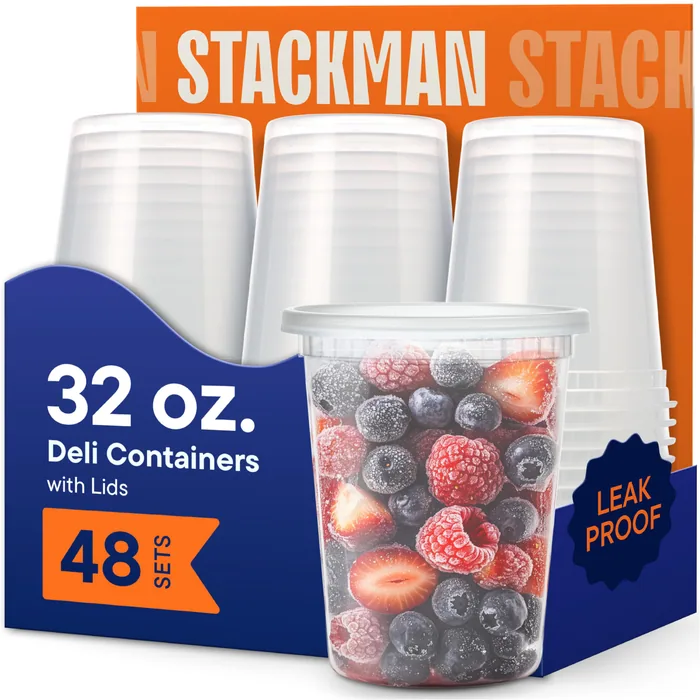
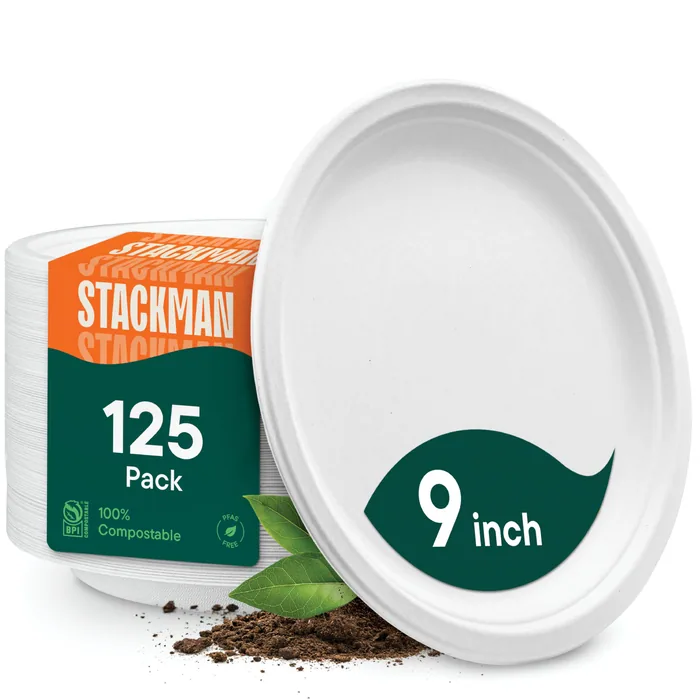
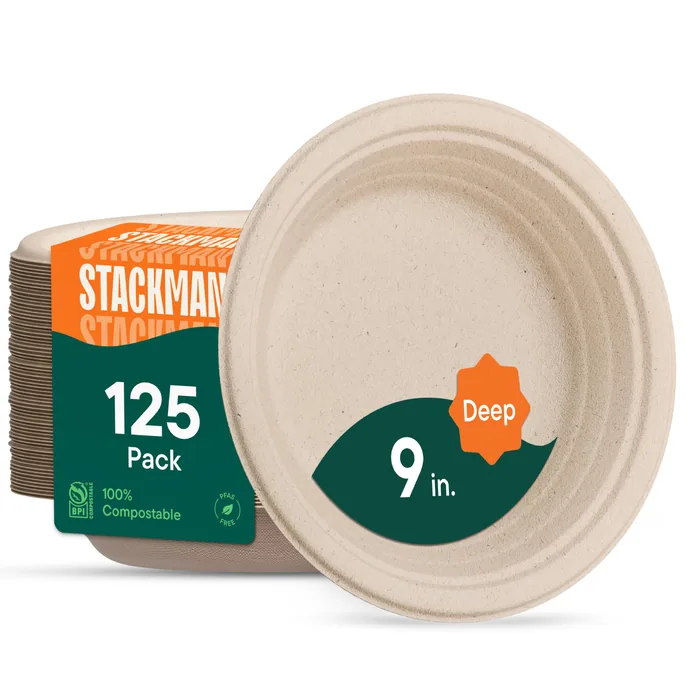
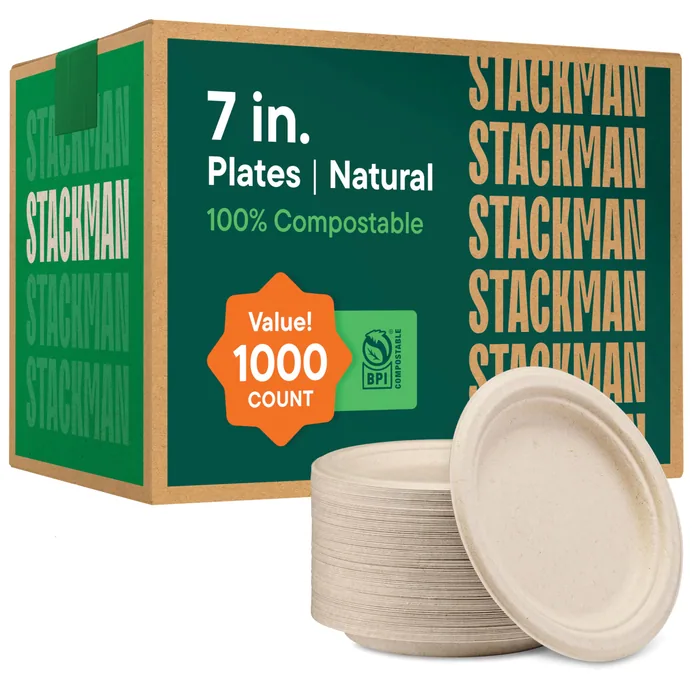
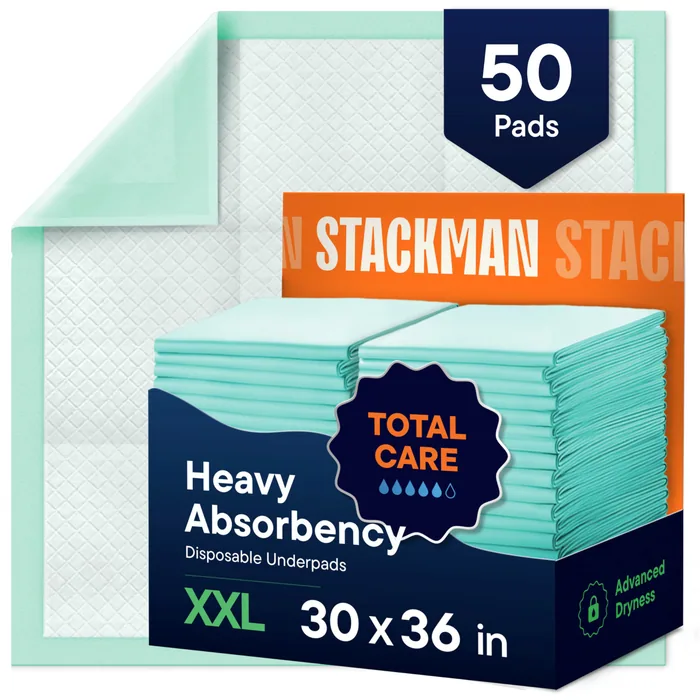
These are our products, photographed as they arrive. You can see what the moulded fibre actually looks like up close. The texture is there, and so are the edges where two plates meet in a stack.
Look at the pack sizes we use. Some hold enough for a dinner party. Others are the case counts that a kitchen goes through by the sleeve. The plate diameters sit next to familiar objects so you can judge whether a 10 inch round will fit your usual serving.
About Stack Man
We started with one problem. A case of containers showed up crushed, and the lids did not seal. That was enough to change how we do things. We buy the product, use it in a real kitchen for a week, and then decide whether it is good enough to carry our name.
Most of what we make comes down to two materials. Sugarcane bagasse, which is the fibre left after cane is pressed for sugar. We mould it wet into plates and bowls, then dry it. And PET plastic, drawn clear so a cold drink looks like a cold drink through the side of a cup.
We test the way you actually use these things. We load a plate with something heavy and wet to see if it holds up. Drop a cup from counter height. Open and close a lid until it stops sealing. If it fails any of that, we do not sell it.
Our range covers 141 products across 8 departments. You will find compostable plates made from bagasse, PET cups with lids that seal tight, take-out containers, deli portion cups, training pads for pets, and protection for bed and incontinence needs. Prices start at $11.99 and go up from there depending on how many you need. The largest pack we offer contains 2,500 pieces, because some kitchens go through them by the sleeve and should not have to reorder every week.
57 of our products are made entirely from plants and certified compostable. Twenty-six are PFAS-free. Thirty are BPA-free. Forty-one are built leak-proof or leak-resistant. We say heavy duty on 72 lines because we mean it. Some go in the freezer. A few handle the microwave. We only print what we can back up.
We work in two materials most of the time, and we pick the one that fits what a product actually has to do.
Sugarcane bagasse is what is left after the cane is pressed for sugar. We mould it wet and dry it into plates and bowls. It holds up under hot food without bending or soaking through. You can put bagasse items in the freezer and pull them out ready to use.
57 of our lines are made this way, and every one of them is compostable. We do not coat them with PFAS. They are not for liquids on their own, and they will not survive a microwave cycle. If you need something that goes in the oven or holds soup without a separate container, this material will let you down.
PET plastic does things that plant fibre cannot. We draw it clear so a cold drink looks like a cold drink. Our PET lids seal tight enough that 40 of our products carry a leak-proof or leak-resistant claim. The plastic is BPA-free. It handles refrigeration and light reheating, but you cannot compost it at home or in a commercial facility. If your priority is a container that disappears after one use, PET is the wrong choice.
Aluminium shows up in 5 of our products where stiffness matters more than anything else. We do not pretend every material can do every job.
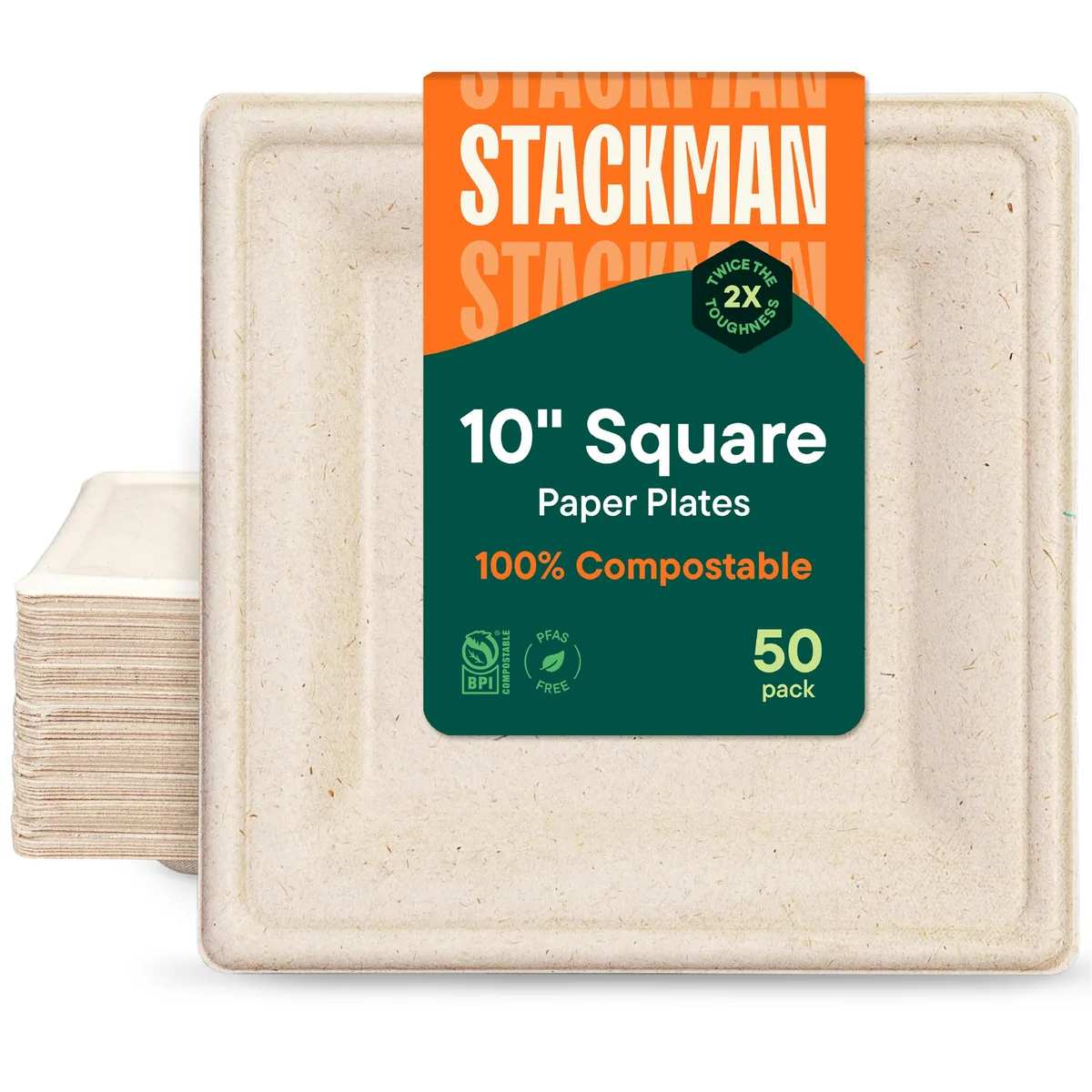
We pack in the counts people actually run out in. That sounds simple, and it is, but it took us a while to get it right. Early on we ordered containers by the sleeve, and a household of four would empty one in about ten days. A case of fifty sleeves sat in storage for months. That was waste, just a different kind.
So we split our range into two sizes. The household pack holds enough for a week or two of normal use. You open it, you use it, you reach for another when the cupboard is bare. No half-empty boxes under the sink. For cafes, food trucks, catering operations that go through supplies by the shift, we pack cases. These are larger counts because a busy kitchen does not stop to reorder every few days. It orders once, stocks it, and gets back to work.
The material we choose depends on what the product has to do. We make 57 lines from sugarcane bagasse, which is what remains after cane is pressed for sugar. It moulds into plates and bowls that hold hot, wet food without buckling, and it breaks down in a commercial compost facility.
For cold drinks and deli items where you want to see what is inside, we use clear PET plastic. It is light, it seals tightly, and it lets a soda or a salad look like itself. Across all 141 products, from 6-inch plates up through 32-ounce cups and 36-inch training pads, the same rule applies: pack it so the person using it runs low at roughly the same time they would think to buy more.
| Department | Products | From | Mostly made of |
|---|---|---|---|
| Pet Training Pads | 9 | $22.99 | PET plastic |
| Bed & Incontinence Protection | 12 | $14.69 | PET plastic |
| Kitchenware | 6 | $18.99 | Aluminium, Paper |
| Deli & Portion Containers | 26 | $11.99 | Plastic, Paper |
| Take-Out Containers | 15 | $18.99 | Sugarcane bagasse, Paper |
| Bowls & Lunch Trays | 12 | $19.99 | Sugarcane bagasse |
| Compostable Plates | 32 | $13.99 | Sugarcane bagasse |
| Cups & Lids | 29 | $17.99 | PET plastic, Plastic |
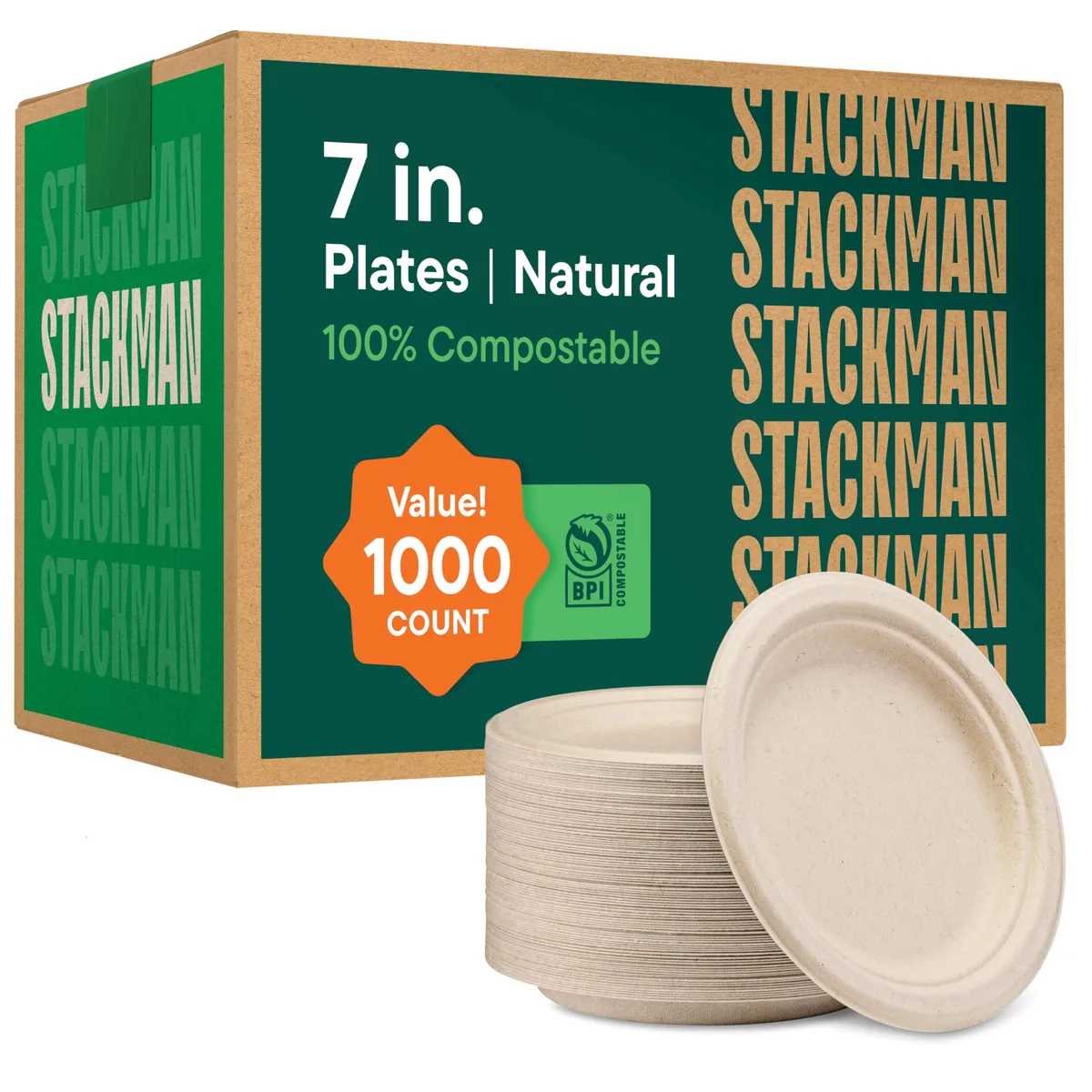
We make 141 products, and they sort into 8 departments. That sounds like a lot until you see how the pieces actually fit together. Compostable Plates and Bowls & Lunch Trays are the tableware you set food on directly. Cups & Lids and Kitchenware handle what you drink from.
Deli & Portion Containers, Take-Out Containers, and our aluminium line are for packing something up so it stays contained. The last two, Pet Training Pads and Bed & Incontinence Protection, are absorbent pads rather than containers at all. Different jobs, but we apply the same standard to every one of them.
What they share is simpler than the department names suggest. 57 of our lines are made from sugarcane bagasse, which is what remains after the cane is pressed for sugar. We mould it wet and dry it into rigid plates and bowls that hold up under hot, wet food. For cold drinks and clear packaging we use PET plastic, and a small number of items come in aluminium. Across all those materials, 57 products in our range are compostable, 27 carry BPI certification, and 26 are confirmed PFAS-free.
We test the way you actually use things. A plate loaded with something heavy. A cup dropped from counter height. A lid sealed and unsealed until it shows us where it fails. 40 of our container lines are rated leak-proof or leak-resistant because we checked them that way.
We pack in the counts that match how fast you run out, whether that is a box for a week or a case of 2,500 pieces for a kitchen that goes through them by the sleeve. Prices start at $11.99. Most items land around $29.99, and per-piece costs run from under three cents to roughly a quarter depending on what you order and how many.
When you buy from this catalogue, the ordering, payment, delivery and returns all happen with our retail partner at checkout.
Our PET plastic items are not compostable. They will not break down in a home bin or a commercial facility. If you want a plate or bowl that goes into the compost, look for the ones we make from sugarcane bagasse instead.
Our aluminium containers are not microwave safe, and neither are most of our PET cups and lids. The few pieces that can go in a microwave say so plainly.
From our journal
What customers wrote
Quoted exactly as written, spelling and complaints included. 4 of these 9 are below five stars, because a page of nothing but praise tells you nothing.
Flimsy with food inside. Need to use aluminum foil at the bottom to place the food on
Good concept, definitely sticks on items, but the residue is very difficult to pull up. And I made the mistake to put it on plastic it ripped and made such a mess removing the pad.Big enough for child or 5’5” adult but anyone taller might have to double up.Not as absorbent as one would expect because I did experience residual leaking below the pad.Overall it does absorb small leaks, and the adhesive does work. Just didn’t meet my requirements or needs.
I absolutely love these cups. Perfect for what I need it for only one thing needs improvement, the correct amount of lids for the cups. I was approximately 10 lids short.
After use I chuck these into my compost pile, and they break down relatively quickly. Knocked off one star because the price seems high.
I decided to take my chances with these pans since the dollar store has been out of stock.I use them for all my casseroles, mac & cheese, baked beans, ect. ~ Super convenient as opposed to having to scrub clean my glass and ceramic bakeware.These are now my new go to pans.Also great for reheating in the oven.Sturdy and Durable enough for my needs- I feed a family of 6 with them effortlessly~1 time use, toss and repeat.The covers seal tightly and fit perfectly.Terrific value! Would definitely re-purchase them
The problem with giving food to friends or sending home leftovers is that you almost never get the container back. I used these to freeze peaches in syrup; have used them for soup. Plan to use them to freeze stew...You get the idea.I *have* put them in the dishwasher and they do surprisingly well. Also, it's pretty easy to remove the lids. That's a big problem with most of the rectangular products. Removing the lid is a pain, and they often crack. We definitely consider *those* to be single-use containers. These actually hold up very well.
I have tried many many brands of pee pads. Most of them dont hold liquid at all. These I actually do like! There was no leaking. These actually feel nice and thick. Theres no odor thats another key thing. I don't smell urine alot say they block odor and dont at all. The quality over all is amazing I will buy these again. It makes cleaning up so much easier because now I dont have to shampoo my carpet. I also do use these for in the dogs crate so they do have versatility for both out and in a crate.
These plates are great. They actually compost, I shred them up. They are sturdy and hold food well even wet food. I’ve been buying them for years
These are very small so I had to use like two at a time and what they were absorbing enough and they were a great value because if you guys use these type of products you know that some of the prices can get a little much so I wish they had like a package that you could buy just two and try them out before you purchase the whole box because even though this did the job I won't be buying it again just because I found a better buy with a different product.
Questions we get
We state BPI certification on 27 of our lines and PFAS-free status on 26. That is what our own product copy says, and it is what we say here. A certificate number or a licence belongs to the body that issues it, so check the claim with them if it matters to your buyer.
Often it will not, and that is worth knowing before you buy for the composting rather than for the plate. Compostable tableware generally needs a commercial facility. Check what your own programme accepts first. If it does not take food-service fibre, the plate is still a good plate, but it will not compost in a landfill.
Our flat and dome lids with a straw slot are made for 12, 16, 20 and 24 oz cups, and we say so on those products. For any other cup size, if a lid has to fit a cup you already own, measure the rim before ordering.
Divide the price by the count. Across our range that number runs from about 2.4 cents a piece to a median of about 25 cents, and the biggest pack is not automatically the best value once you have somewhere to keep 2,500 of something.
We state microwave safety on 7 products and freezer safety on 20. Treat any product without that mark as not microwave or freezer safe. Reheating a lid is a bad idea on any of them.
It depends on what you are protecting rather than on who is using it. A chair or a changing table takes the smaller sheets. A single bed is usually the middle sizes, and a double bed or a restless sleeper wants the largest. Our guide to pads walks through the sizes properly.
No. You order from our retail partner, and payment, delivery and returns are settled there at checkout. We make the goods and publish what they are. We do not take your money or pack your parcel.
Because it has no buyable price at the moment. We would rather a product left the range until it can be bought again than leave a page standing with a figure nobody can honour. When it comes back, so does its page.