Stack Man journal
Choosing underpads and training pads: size, absorbency and dignity
One pad serves care at home, a changing table and a puppy. What the sizes mean in practice, how a bed is really protected, and when to ask a health professional.
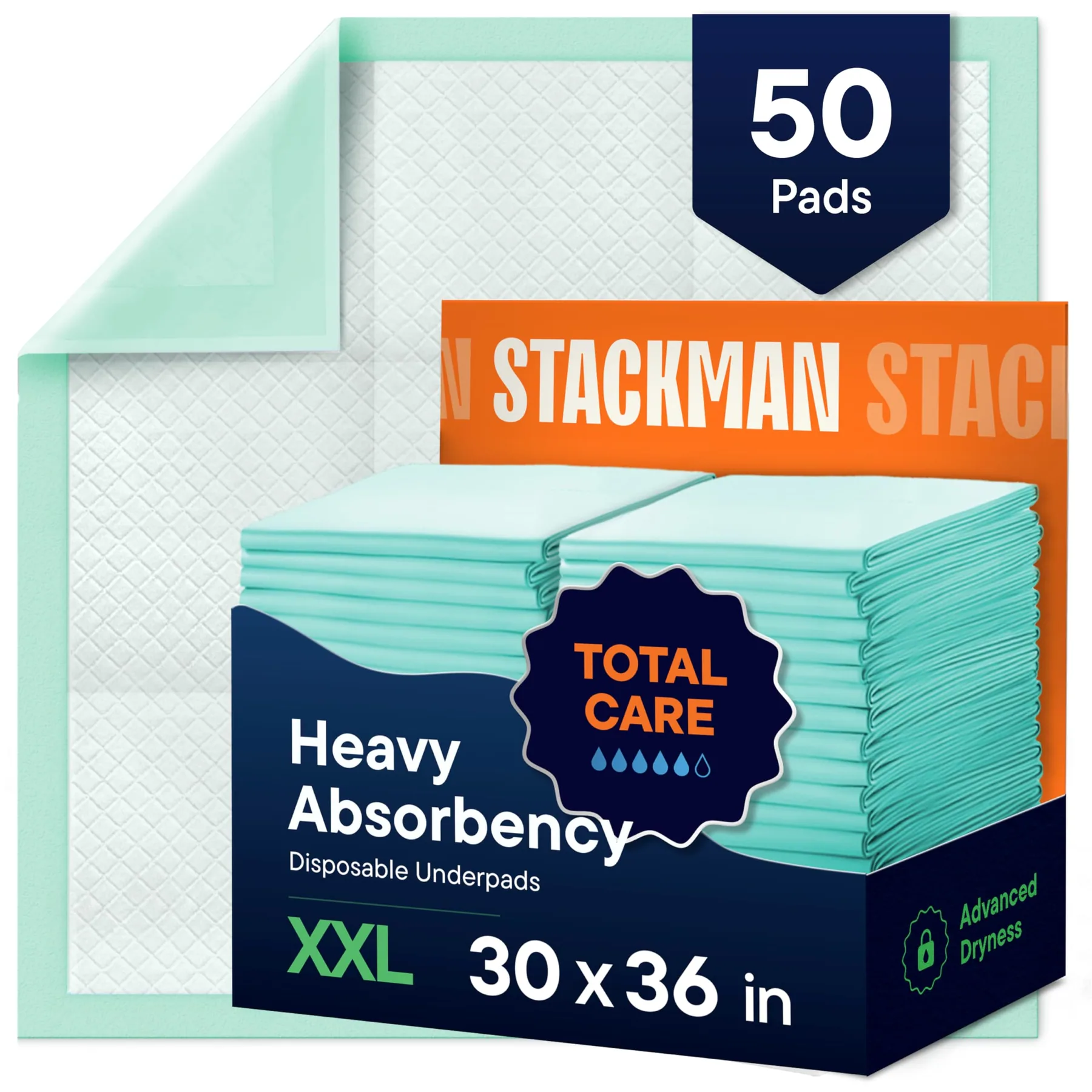
One product, several very different jobs
The people who reach for these pads do not have much in common on the surface. A new parent keeping the bassinet dry. A daughter helping her father stay comfortable at night. Someone house-training a puppy who has not yet learned where the door is. Or an older dog who simply cannot hold it the way he used to. Different households, different reasons, and the same product sitting under all of them.
That is not an accident. A pad that pulls moisture away from skin will also pull it away from a paw. One that locks in liquid so a mattress stays clean does not care whether the liquid came from a sippy cup or an aging bladder. We build them to handle what gets put on them, and we let you decide what that is.
We make pads in a good many sizes here, which tells you something about how many sizes a real situation actually demands. A crate pad for a medium dog is not the same shape as a bed pad for someone who shifts in their sleep. A puppy being trained needs coverage where he stands, not necessarily where he curls up. An incontinence pad has to stay flat and dry through eight hours when the person on top of it cannot or should not get up to change it.
So we cut them wide. Our smallest pads run 17 by 13 inches, enough for a small crate or a chair. The largest stretch to 36 inches square, which covers most of a twin bed when you place it right. In between those two ends we have rectangles in 17 by 24, 23 by 36, and 30 by 36, along with a few less common shapes for specific setups.
You know your room and your routine better than we ever will. The right size is the one that fits the space where the problem actually happens.
Absorbency matters more than marketing language once the pad is down. All of ours are built heavy duty, which means they take a lot before they stop working. But no pad holds forever, and none of them should be asked to. Change it before it needs changing, and it will do what you bought it for.
What the sizes mean once they are on a bed
The smallest pad we make is 17 by 24 inches. It covers a standard chair seat or a small section of a couch, and it tucks under the cushion without bunching up. If you are protecting a single spot, like where someone sits to read or watch television, this is the one that does the job without taking over the whole room.
Move up to 23 by 36 inches and you have something that works for a twin bed or a changing table. It lies flat across the width of most mattresses with room to spare on either side. Parents use this size on diaper stations because it catches what it needs to catch and still leaves space around the baby for wipes, cream, and a fresh outfit.
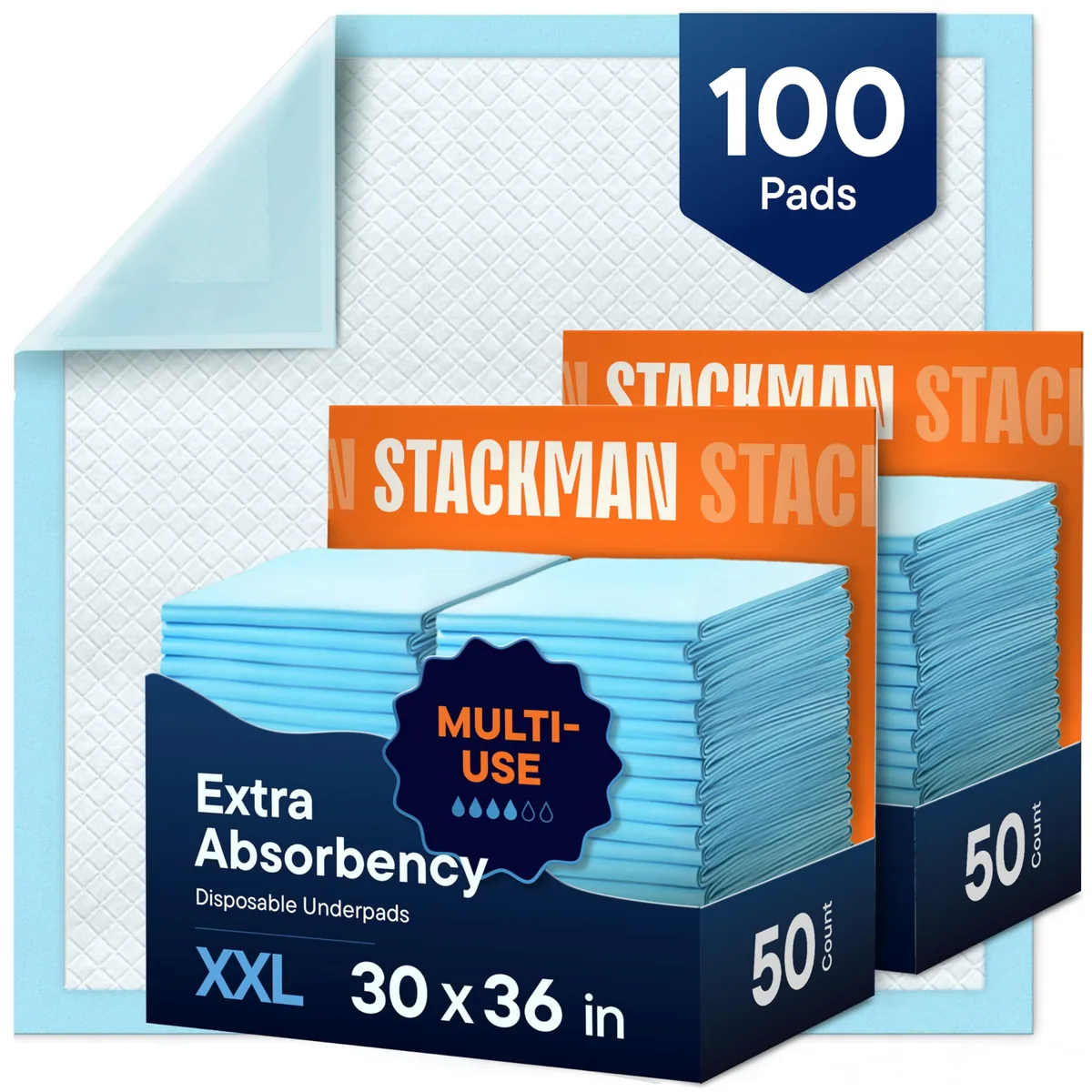
Our 30 by 36-inch pad is built for a full-sized bed. It sits across the middle section where a person actually sleeps, not just the edge. This is the size we recommend when someone turns in their sleep or shifts position during the night. A smaller pad will miss them when they move. This one stays underneath.
At 34 by 36 inches, you are looking at coverage for a queen bed or a hospital-style mattress. The extra width means you can place it so that it protects from shoulder to hip on either side of the body. Care facilities often reach for this dimension because it reduces the number of times staff have to change bedding during a shift.
The largest pad we make measures 36 by 36 inches square. We made this one for king beds and for situations where nothing less than maximum coverage will do. It covers the area where two people sleep without forcing anyone to stay put in one spot all night. Some customers also cut these into smaller pieces for wheelchairs or car seats, though we sell specific sizes for those uses if you prefer not to trim them yourself.
Pick the size that matches the surface you need to protect, then add a few inches on every side. A pad that barely fits will creep toward the edges the first time someone moves on top of it.
| Size | What it suits | Lines | From |
|---|---|---|---|
| 17" x 13" | Changing tables and travel | 1 | $18.59 |
| 17" x 24" | A chair, a car seat, a small dog | 4 | $14.69 |
| 22" x 22" | A puppy tray or a compact breed | 3 | $22.99 |
| 23" x 36" | A single bed, the common size | 2 | $21.99 |
| 28" x 30" | A large breed dog | 2 | $29.99 |
| 28" x 34" | A large breed dog, more coverage | 1 | $41.99 |
| 30" x 36" | A double bed or a restless sleeper | 3 | $34.99 |
| 34" x 36" | The largest dogs | 2 | $34.99 |
| 36" x 36" | Full width of a double bed | 2 | $39.99 |
How a bed is actually protected
A bed pad sits where you need it. That is the whole idea. You put it on the mattress, under the sheet or directly under the person, and it keeps what leaks from reaching the fabric underneath. We make them in sizes from 17 by 13 inches up to 36 by 36 inches because one size does not fit every situation.
What goes over the pad matters as much as the pad itself. A fitted sheet holds a mattress pad in place so it does not bunch up when someone turns in their sleep. For a chair or wheelchair, you tuck the pad into the seat and back. The goal is the same either way: keep the absorbent layer where the accident happens, not balled up at the foot of the bed.
Two small pads side by side seem like they cover more ground. In practice they create a gap right where you do not want one. When a person shifts weight, those pads slide apart. Liquid runs down the seam and soaks through to the bedding anyway. One large pad covers that same area without a seam in the middle. It stays put, it absorbs across the full width, and you only have one thing to change when the time comes.
We build our pads with a waterproof backing so nothing passes through to the mattress beneath. The top layer pulls moisture away from skin and locks it inside the core. This matters for anyone who spends long hours sitting or lying in one place. A wet surface against skin breaks down quickly. Our pads hold what they take in so the person on top of them stays dry for longer between changes.
Pick the size that covers the area where accidents actually happen, with a few inches of margin on each side. Measure the width of the mattress section you need protected, or the seat of the chair. Then choose the pad that spans that space in one piece.

What absorbency means, and where it ends
Absorbency is the number most people look at first, and it is also the one that gets misread most often. When a pad says it holds a certain amount of fluid, that figure comes from a lab test where liquid is poured slowly onto the surface until the core cannot take any more.
It tells you what the pad will contain if nothing presses down on it. Real use does not work like that. A person sits on the pad, or a pet walks across it, and that pressure squeezes fluid back out. The core has to hold it against weight. That is what actually matters.
The core itself is doing two jobs at once. First, it pulls liquid away from the surface so skin or paws stay dry. Second, it locks that liquid inside so it does not leak when someone shifts position. Most disposable pads manage this with layers of fluff pulp and polymer.
The pulp spreads the fluid through the pad. The polymer, which is the same material used in diapers, swells into a gel and holds onto what it has absorbed. A pad with more of this material will generally hold more before it feels wet on top, but thickness alone is not a reliable guide.
Some thin pads use concentrated polymer and perform as well as thicker ones that rely mostly on pulp.
There are real limits to what any disposable pad can do. No pad keeps working once it is full. The surface will feel damp, the fluid can migrate to the edges, and the backing will let moisture through if enough pressure sits on one spot for long enough.
A heavier pad delays that point. It gives you more time between changes. It does not eliminate the need for them. For overnight protection or for someone who cannot change position easily, a higher absorbency rating is worth paying for. For quick cleanups during house training, or for catching small spills under a serving dish, a lighter pad does the job without the extra bulk.
Care at home, written with respect
A pad does its work when nobody is watching. It sits between a person and their mattress, or under a pet's paws, and it holds what would otherwise soak into something harder to wash. We make them in sizes that cover a single accident and ones that span most of a bed, because the right size is the one that catches what you expect without folding over itself.
Changing a wet pad is easier when you have what you need within reach. A clean replacement, something to wipe the skin with if you are caring for someone else, and a bag for the used one. Pull the soiled pad toward you rather than lifting the person, if you can.
It takes less effort and it pulls less on their back. Our larger pads have enough surface area that you can tuck the edges under the mattress slightly, which keeps them from bunching up when someone shifts in their sleep.
Disposal is straightforward. These pads are not compostable, unlike some of our plates and bowls. They go into regular household waste. Roll the used pad inward so the wet side stays inside, tie it closed if it came in a individual wrapper, and drop it in the bin. A small lidded bin in the room where the pads are used saves a trip down the hall at two in the morning.
Keeping the bed usable between changes matters more than most product descriptions will tell you. A waterproof mattress protector underneath everything is worth the investment. It stops anything that escapes the pad from reaching the mattress ticking, and it wipes clean in seconds. Change the pad as soon as you notice it is wet.
Skin that stays damp breaks down faster than most people realize, and a fresh pad costs less than a treatment for a pressure sore. If you are managing nighttime care, check the pad during any natural wake, or set a time that works with the person's rest pattern rather than an arbitrary schedule.
We pack our pads in counts that fit how they are actually used: a smaller box for occasional needs and bulk cases of 150 or 300 when you are stocking a facility or a household that goes through them regularly.
A person has urinary incontinence (UI) when urine leaks accidentally.
National Institute of Diabetes and Digestive and Kidney Diseases, National Institutes of Health, Bladder Control Problems (Urinary Incontinence), read 22 August 2026
When this stops being a shopping question
Some questions about pads are ours to answer. You want to know if a 17 by 24 inch pad will fit under a standard hospital bed, or whether our heavy duty line holds up overnight for an adult. We can help with that. We make the pads. We know what they do.
Other questions belong to someone else. If you or the person you are caring for is losing a noticeable amount of weight without trying to, that is not a pad choice. It is something to bring up at the next appointment. The same goes for new confusion that comes on fast, pain when you urinate, or any bleeding that does not have an obvious cause like a recent procedure.
A thicker pad will not fix those things, and waiting to mention them while you shop for supplies can cost you time.
Skin is another area where we draw a line. Our pads pull moisture away from the surface, and we make them without PFAS because we do not want unnecessary chemicals near your body. But if skin stays red or sore after you change the pad, or if it breaks open, that is a wound care question. A nurse or doctor needs to see it. No product in our catalogue, or anyone else's, treats an existing skin injury.
We also hear from people who are shopping because a parent has started having accidents after years of being fine. That is worth a conversation with their primary care provider. It can be a simple infection, a medication side effect, or something else that responds quickly to treatment. Buying case quantities of heavy absorbency pads before you know what you are dealing with can lock you into a solution you do not need.
What we sell is protection once you know what you need. Getting that part right is a medical step, not a catalogue step, and it deserves professional attention.
You may have a bladder control problem if you often feel a sudden urge to go to the bathroom or if you leak urine during normal activities. See a health care professional if you have any bladder problems.
National Institute of Diabetes and Digestive and Kidney Diseases, National Institutes of Health, Bladder Control Problems (Urinary Incontinence), read 22 August 2026
Childbirth, menopause, aging, and other health factors can cause or contribute to a woman’s bladder control problems.
National Institute of Diabetes and Digestive and Kidney Diseases, National Institutes of Health, Bladder Control Problems (Urinary Incontinence), read 22 August 2026
Puppy and dog pads are not the same product
Puppy pads and human underpads look like they do the same job, and in one way they do. Both hold liquid so it does not soak through to whatever is underneath. But we make them differently because a dog uses a pad differently than a person does.
Our training pads have a surface that pulls moisture down fast and keeps the top layer dry enough for paws. A dog will step on the spot more than once, and if the surface stays wet she will track it across the floor. Human underpads are softer against skin and spread the wet area wider, which feels better when you are lying on one but means less protection per square inch where the puddle lands. If you use an underpad for a puppy, you will change it more often.
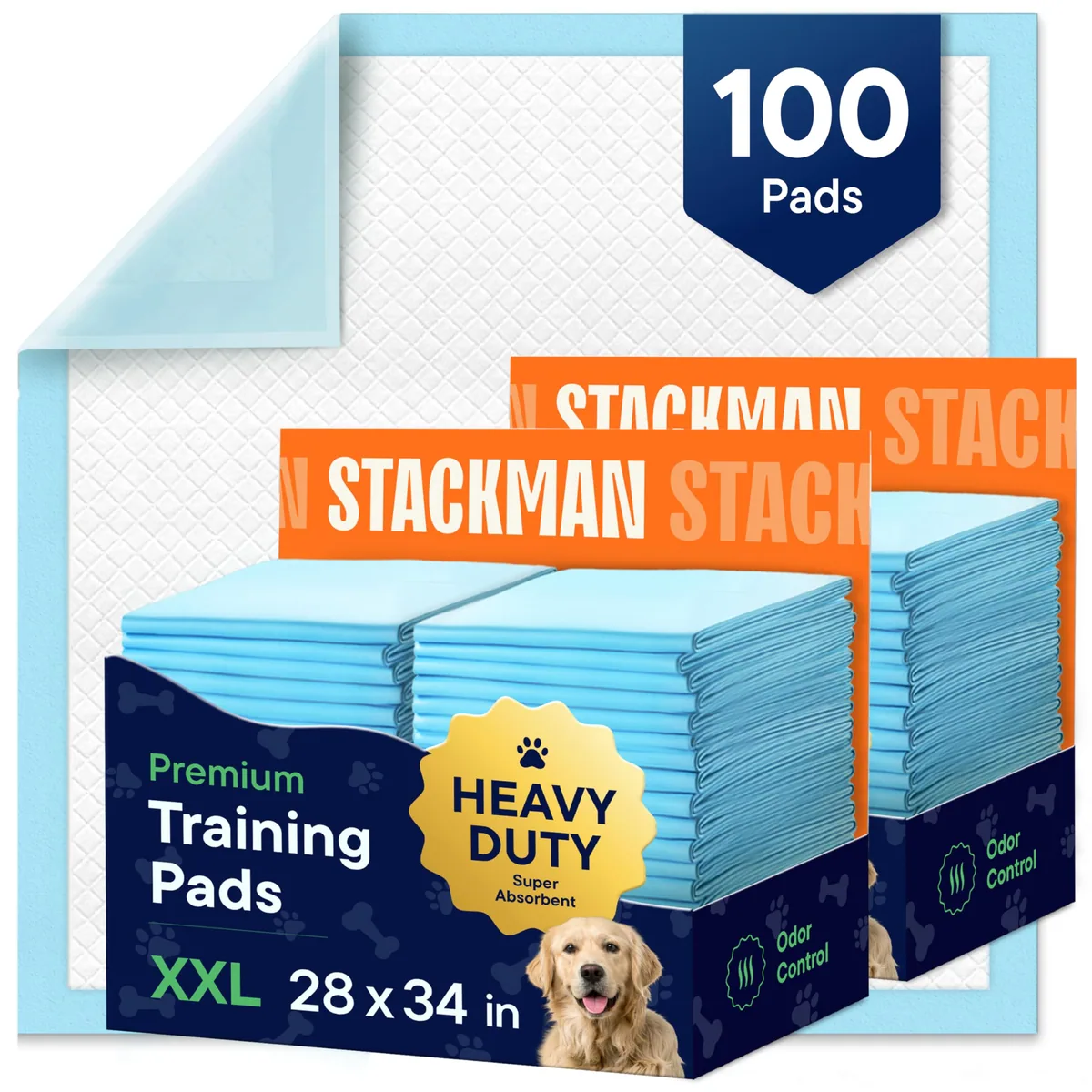
Size matters more with dogs than you might think. A small breed under ten pounds can manage on our 17 by 13 inch pad for most of her training, though we would move up to 22 by 22 once she is past the accident-every-hour stage.
Medium dogs from twenty to fifty pounds need at least 17 by 24 inches to give them room to turn around without stepping off the edge. Anything larger than that, and you want our biggest pads: the 28 by 30 or 34 by 36 inch sizes.
A Great Dane or Mastiff standing on a small pad is not learning to hold it. He is just missing.
Pad training works well for apartment living, for people who work long hours, and for older dogs who cannot wait as long as they used to. It has limits. Some males will never stop lifting their leg on furniture instead of the floor, and no pad fixes that.
A few dogs decide that the pad is optional and pick a corner of the rug instead. That is not a failure of the product. It is a dog being a dog. For those cases, a crate or a regular outdoor schedule will get you further than any absorbent material we can ship.
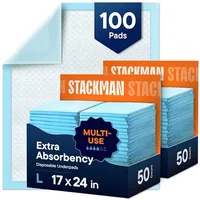
Changing tables and travel
A full-size underpad covers the bed and stays put through the night. That is what it is for. But not every situation calls for that much coverage. When you are changing a baby on a table, tucking a pad into a diaper bag, or lining the backseat of a car for a short trip, a 30 by 36 inch sheet is more trouble than help.
It bunches up. It drags on the floor. You end up folding it into quarters anyway, which means three-quarters of the material you paid for is doing nothing.
This is where our smaller training pads make sense. We make them in sizes down to 17 by 13 inches. A pad that size fits entirely on a standard changing table with room to spare around the edges, so you can lay a child down without the corners curling up or hanging off the side. Because it sits flat, it does not shift when the baby moves, and you do not have to hold it in place with one hand while you work with the other.
For travel, the same logic applies. A folded 22 by 22 inch pad will slide into a shoulder bag or a glove compartment. Pull it out at a rest stop or a friend's house and you have a clean, absorbent surface in seconds. No wrestling with a oversized sheet in a cramped space. When you are done, most of our pads roll or fold small enough to toss back in the bag until you reach a bin.
We still build these smaller pads to the same standard as our largest ones. They use the same core material and carry the same leak-resistant backing. The difference is not in quality. It is in matching the right tool to the job. A changing table needs coverage that fits the table. A car seat needs something that fits between two children without spilling onto the floor. Measure the space you actually have. Then pick a pad that fills it, instead of one you have to work around.
What we make, and which size does which job
We keep ten products in this department. They are not all the same thing dressed up in different names. Training pads and underpads do different work, so we size them for the job they have to do.
Our training pads come in three sizes. The smallest is 17 by 13 inches, which fits a standard puppy crate or a small playpen. You can lay it flat or fold it to cover just the corner where your dog prefers to go. The mid-size pad measures 17 by 24 inches.
It covers more floor area for an older puppy who has learned to hold it but still needs a backup spot. Our largest training pad runs 23 by 36 inches, and we made this one for dogs who pace before they go. A single pad covers enough ground that they can turn around without stepping off onto your floor.
For bed protection and incontinence care, we make pads that stay put under a person rather than under a pet. The 22 by 22 inch pad works on a chair seat or a recliner where someone sits for long stretches. If you need coverage across the width of a twin mattress, our 28 by 30 inch pad will reach edge to edge on most beds. The 34 by 36 inch size handles a full mattress with room to tuck in at the sides.
We also stock two sizes for wider surfaces. The 30 by 36 inch pad covers half of a queen bed, which helps when one side of the mattress needs more protection than the other. Our biggest underpad in the range is 36 by 36 inches, and it gives you a full yard of coverage in every direction. That size is meant for hospital-style beds and for anyone who moves around a lot while they sleep.
All ten pads use the same core construction: a quilted absorbent layer sandwiched between a waterproof backing and a soft top sheet. We do not sell thin liners that soak through after one accident. If you are choosing between two sizes and you are not sure which one fits your situation, pick the larger one. An overlarge pad that stays dry at the edges costs less than changing your sheets at two in the morning.
The short version, and one caution
Pick the size that covers the surface you need to protect. A 17 by 13 inch pad fits under a single pet bowl or a small bed. For a standard twin mattress, you want the 34 by 36 inch size. If you are covering a large crate floor or a section of carpet, go wider still.
Absorbency matters more than thickness on its own. We make pads in weights that hold different amounts of liquid, and the right one depends on how long it will sit between changes. A puppy learning to wait for walks needs something that pulls moisture away fast so she does not stand in it. An overnight underpad for an adult has to keep the skin dry through eight hours or more. Match the size and the job rather than reaching for the biggest pad on the shelf.
One thing to be straight about: no disposable pad is completely waterproof at every point along its edges if you leave it long enough. Liquid that pools in one spot can eventually seep past the border. We build ours with sealed edges and a backing that holds up well against ordinary use, but if someone sits on a saturated pad for hours, you may see some dampness transfer to what is underneath.
Change them before they get that full, and check the surface beneath now and then if it matters to you.
We sell these in counts from small household packs up to cases of several hundred, so you can buy enough to last a month without running out midweek. Ten sizes across our training and incontinence lines means there is usually a fit for the space you have. Measure the area first. Guessing almost always means a return or a pad that slides around because it is too narrow for the job.
Where this came from
Everything quoted above is linked below, with the date we read it.
- Composting, U.S. Environmental Protection Agency. Read 22 August 2026.
- PFAS Explained, U.S. Environmental Protection Agency. Read 22 August 2026.
- Bladder Control Problems (Urinary Incontinence), National Institute of Diabetes and Digestive and Kidney Diseases, National Institutes of Health. Read 22 August 2026.
- Compostability Certification, Biodegradable Products Institute. Read 22 August 2026.